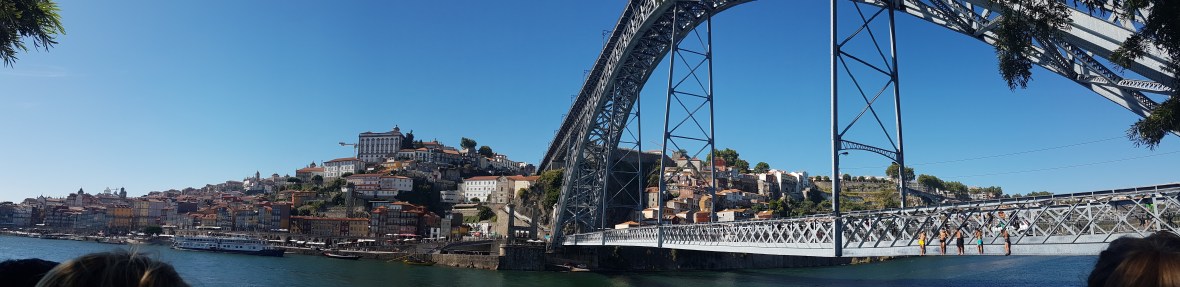
Teenagers ready themselves to dive (for money) from the Dom Luis Bridge
In Porto, you can obviously call the locals, Portuguese. But that doesn’t exactly distinguish them from anyone else in the country. So you call them tripe-eaters instead, and when you say that, they may beam with pride. They are proudly named Tripeiros.
This stemmed from a story from hundreds of years ago, when Porto’s most famous son Henry The Navigator set sail from his hometown in search of far and distant new worlds.
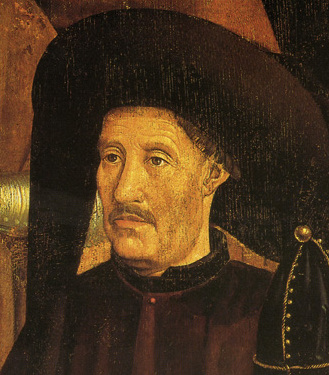
‘Give me your meats yo’
He called out to the local people to help prepare his men for the journey and they responded by lavishing upon them all their most succulent and juiciest cuts and chunks of meat. They sacrificed their own daily diets, for the health and ambitions of their brave sailors , to ensure they were strong for the journeys ahead.

All the best cuts for Henry
And thus, back in their homes, there was no meat left to eat – no meat except for the most undesirable pieces – the tripe.
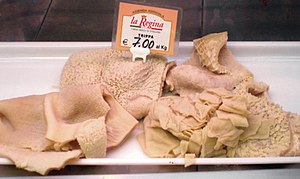
Bleugh
But they made do with what they had – embraced thy tripe, and thus enshrined it within their culture and cook books. Tripe stew is now one of the city’s most beloved dishes – hearty and full of historical significance. To the Tripeiros out there, it’s a great story and you should be proud. But neh I just won’t be partaking in the voluntary consumption of animal guts.
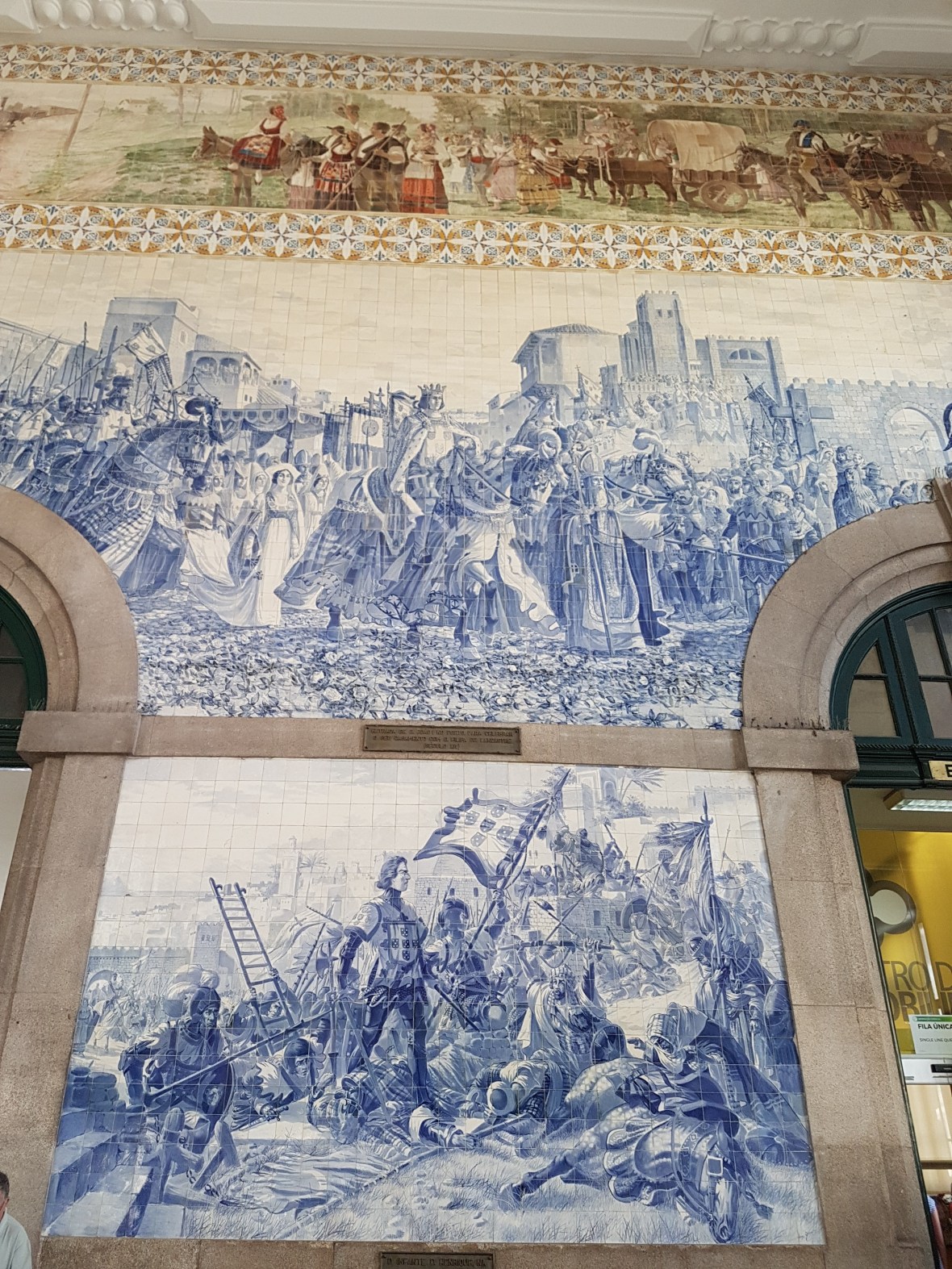
Portrayals of Henry in battle adorning the four walls within Sao Bento train station
Let’s get the review out of the way first. I loved Porto. It’s beautiful and charming and so goddamn sunny. I joined a walking tour here, and each time I go on one of those I remember how much more vivid the memories are, even if I can’t even recall it in words. An experience becomes that much richer when you can associate sentiments and history and even the tour guide’s evident passion to it.
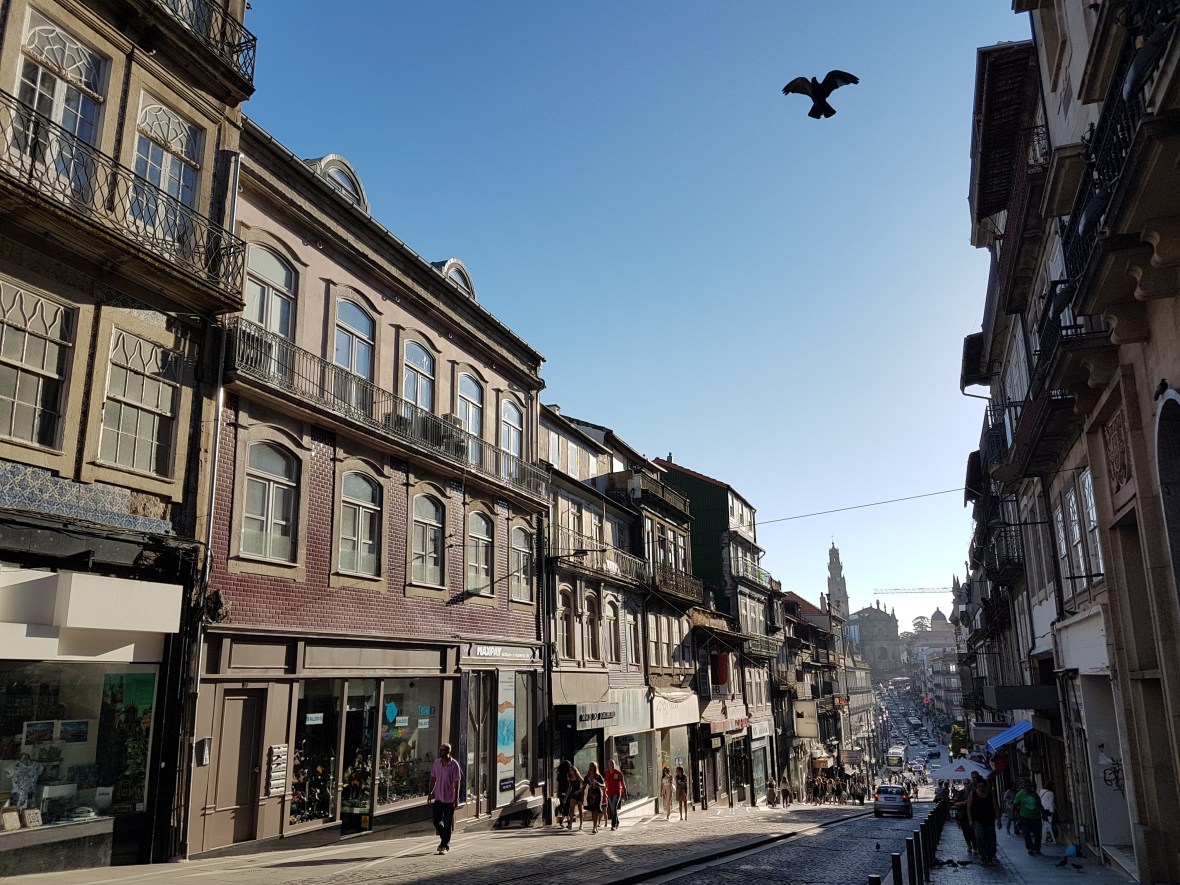
Before I came here, I heard some people complain that it was “too small”. I think that’s an unfair statement that doesn’t really address the question of ‘is Porto worth visiting. If you are in Europe and you have more than a few days to spend in Portugal, absolutely go see Porto. If it’s a UK bank holiday and you want a quick sunny getaway, this place is perfect for that. Sure it’s a pretty compact town, but that’s perfect for a long weekend and I’d rather have small, compact and beautiful to sprawling and soulless (oh hello Los Angeles, I had forgotten about you).
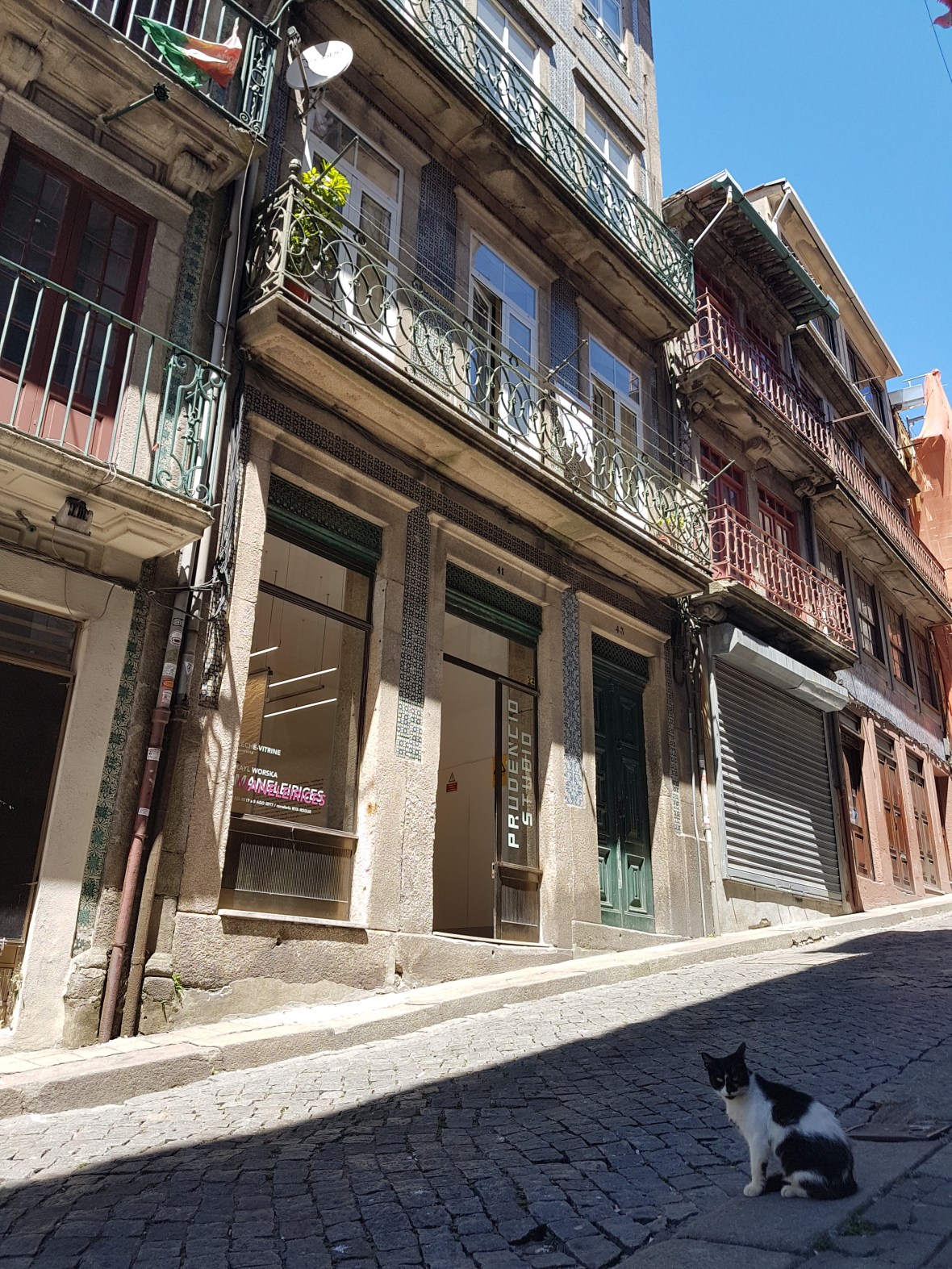
Oh hello.
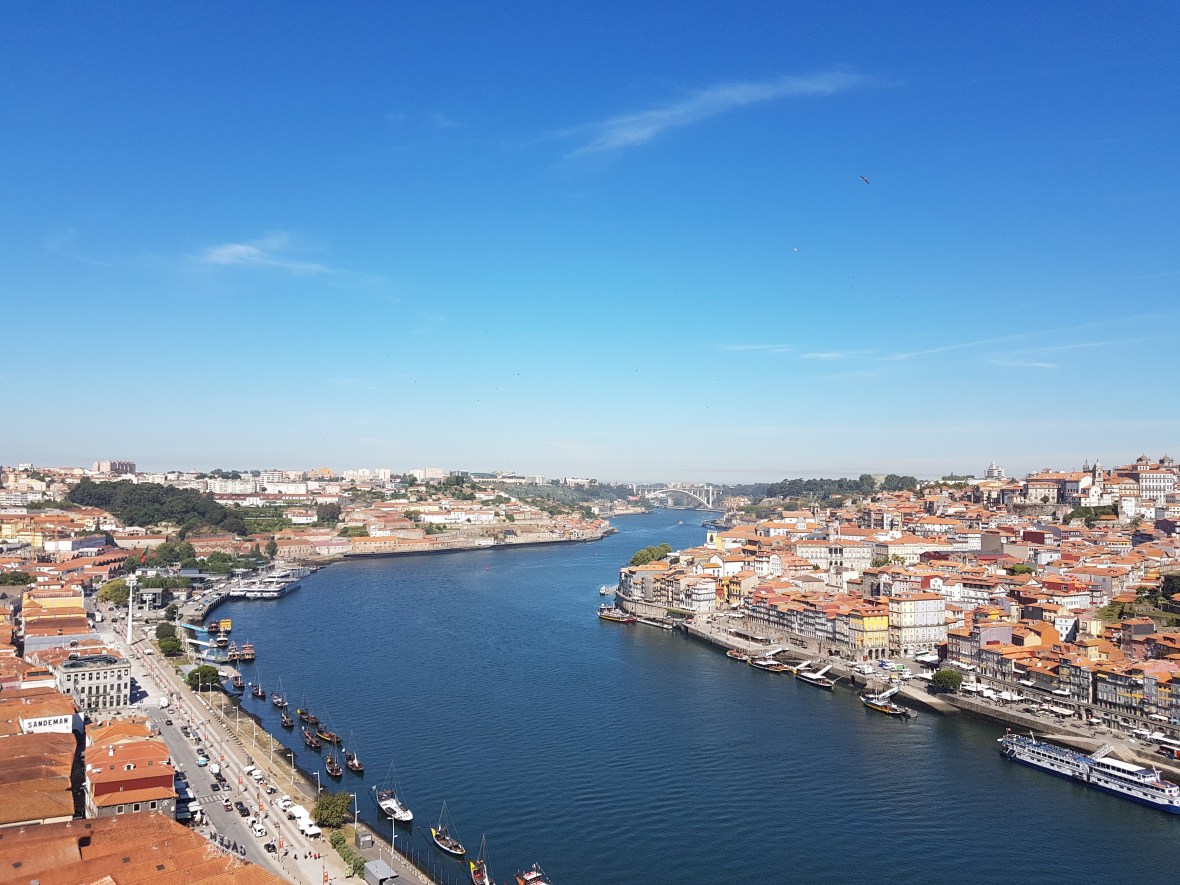
The below photo is my enduring memory (and I guess the picture postcard view) of Porto. This is the river Douro, splicing apart the city of Porto on the right, and an entirely separate city named Vila Nova De Gaia (herein you shall find that sweet nectar they call Port) on the left. The stunningly clear blue skies and sunshine are very regular fixtures in these parts, which means your photos as well as your memories remain warm and wonderful well after your trip.
In the interests of brevity (read: I can barely remember anymore), there are three key things worth noting about Porto. This isn’t to detract from it’s general beauty – other than the clear blue skies and beautiful myriad of clay tiled roofs across the city, the streets are steeped in small, steep and zig-zaffy paths and alleyways that add to the charm of the city. However, I’m gonna call out the following for special note here:
- Food
- Fado
- Port (of course)
Food
There shall be no further mention of tripe here. Aside from intestines, the folks here do enjoy their caloriffic, carb-heavy meals. The first mention has to be Francescinha:
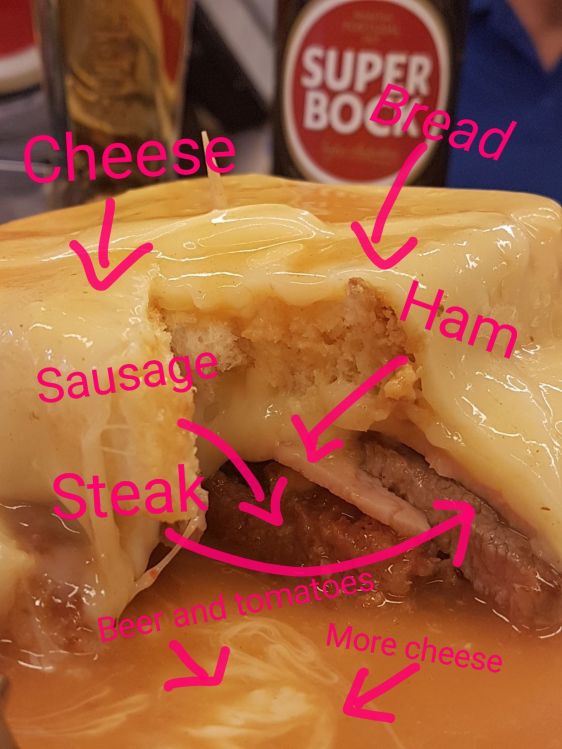
The above annotations tell you all you need to know about this sandwich-cum-heart-attack-on-a-plate. It is the famed dish of Porto, and my guide told me it’s not so often that locals actually eat this – perhaps if they’re particularly famished or hungover. A useful tip is – don’t bother ordering fries if you’re attempting to finish the entire sandwich. I can safely say it tastes like what you’d imagine a mash up of meat, cheese, bread and sauce tastes like, i.e. pretty good but you’d not have it regularly.
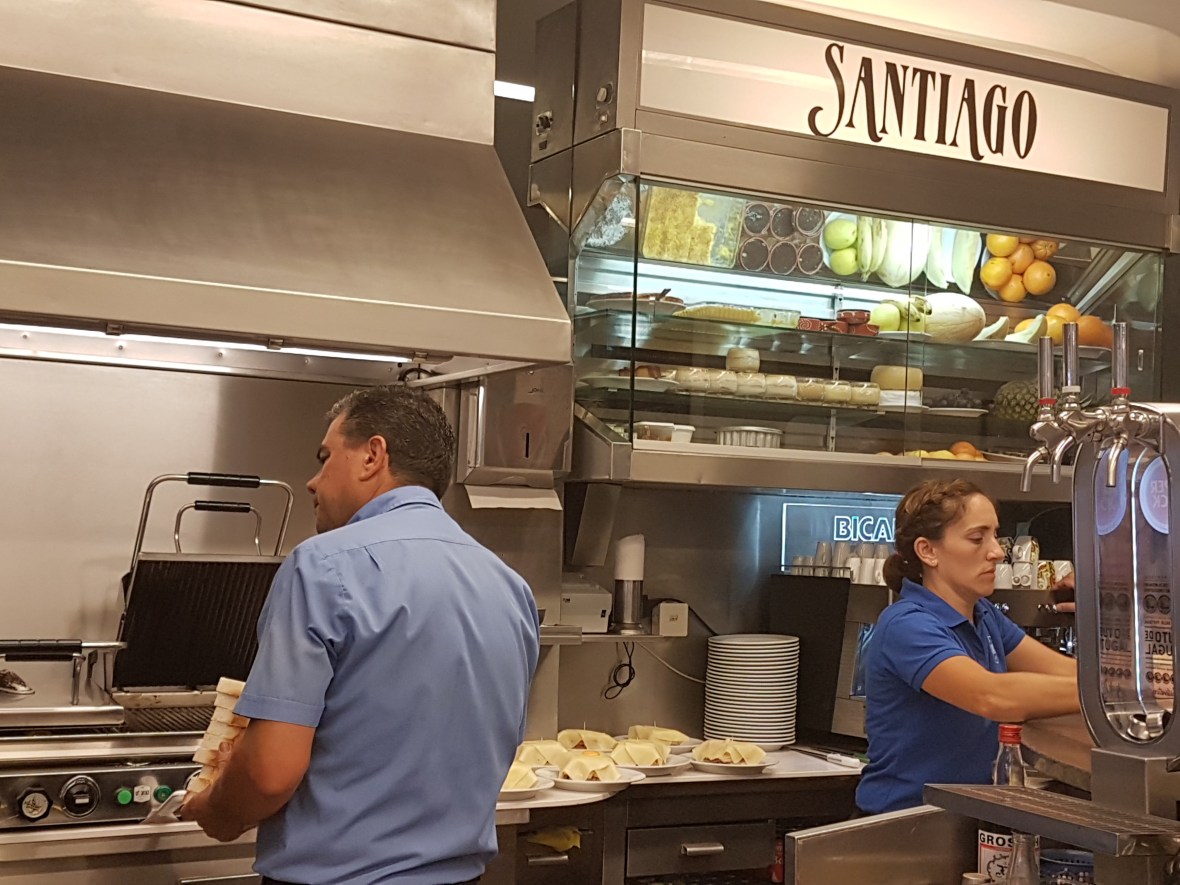
I trotted all the way to the famed Cafe Santiago for this beast. I found out afterwards that there were multiple ‘Cafe Santiago’s’ all around that area, all cashing in on their Francescinha fame. Lord knows whether I went to the right one but there were enough patrons there to assauge me nonetheless so i’m going to be like the Biebs and believe.
Another well loved dish in Porto is Octopus rice. I went to “Solar Moinho de Vento” for this one, which was well rated and especially famed for this dish.
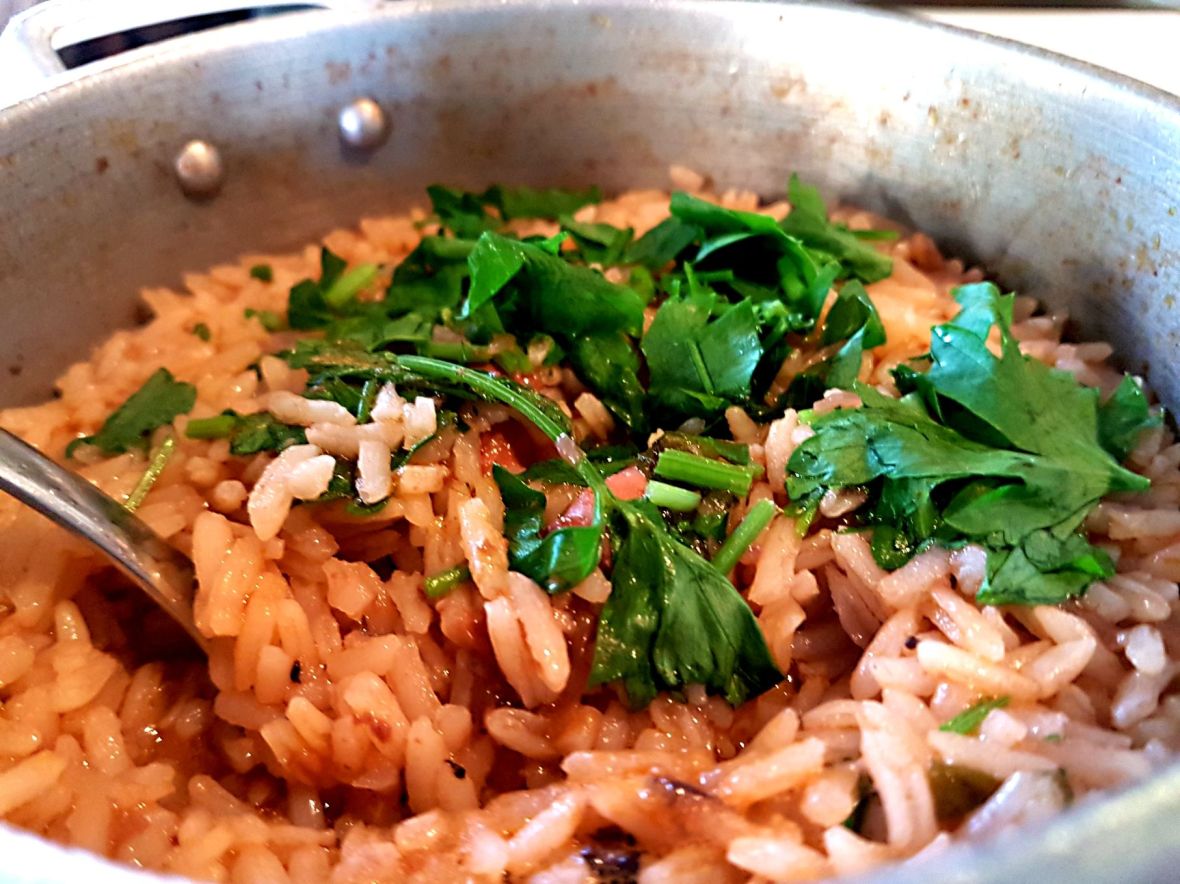
The portion was absolutely huge. It was plonked hot and steaming at the table in a little robust pressure cooker, where I was to scoop and dollop out juicy chunks of octopus buried within a sea of stewed moist rice. I am not the biggest fan of Octopus as it has a particular texture and taste which gets a bit much after a while but I did enjoy it, even though I was positively bursting afterwards. I paired the meal with some signature ‘Green Wine’ (essentially, young wine but is again quite famous here) which was cheap, cheerful and hit the spot.
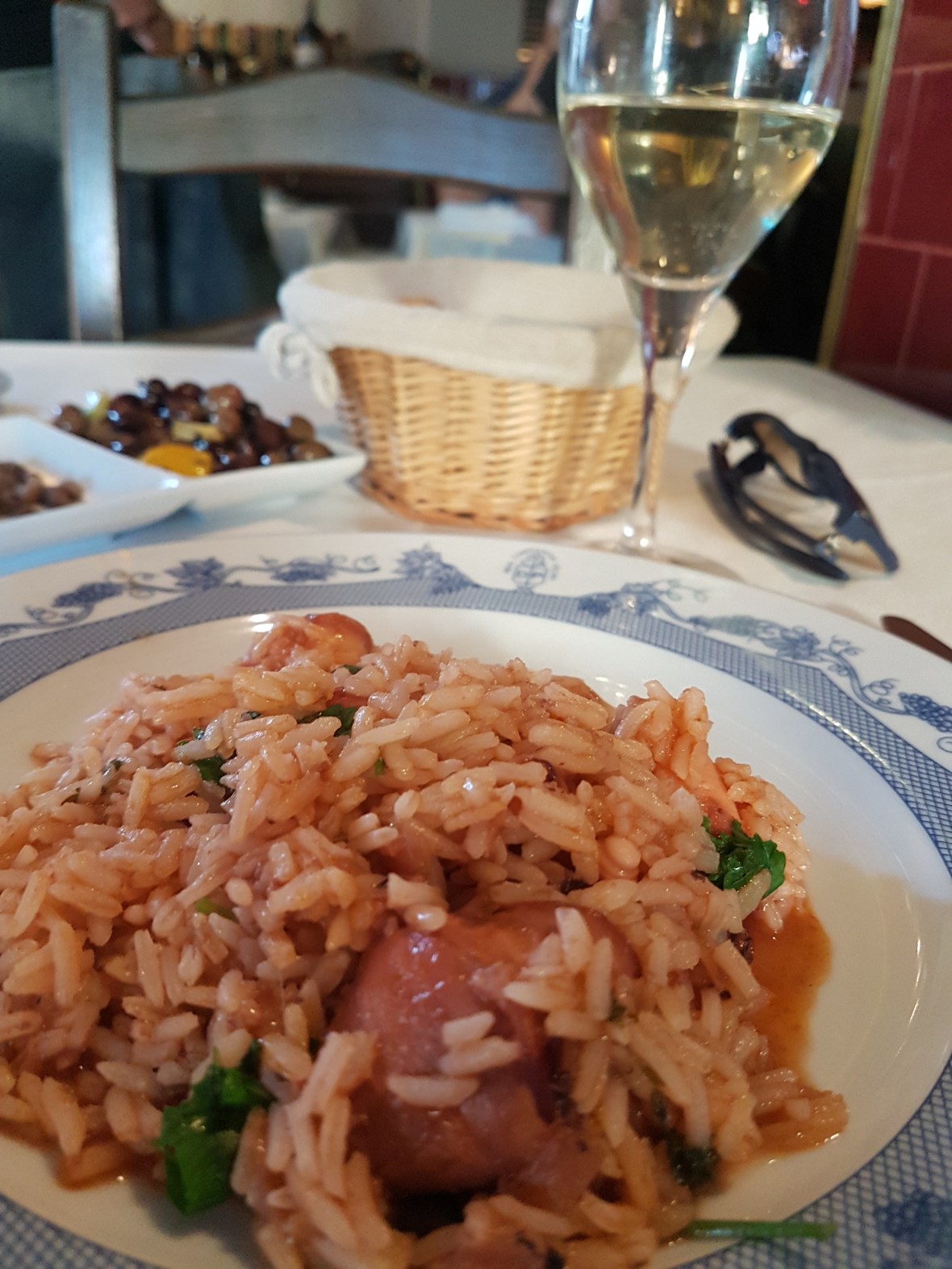
#blessed
Finally, we move onto Pasteis De Nata – or portuguese egg tarts. The most famous ones are found in Belem in Libson (we’ll get to that), but I got my tart on at Manteigaria which as it turned out, had recently opened a brand-spanking new branch in Porto.
These little things were beautifully baked and were fresh out the oven. The pastry was light and crispy, and the egg filling was *gueeaarhhl* (Homer Simpson drool) soft, creamy and sweet. This was a million miles away from the dry, firm tarts you’d find in say, a Hong Kong cafe.
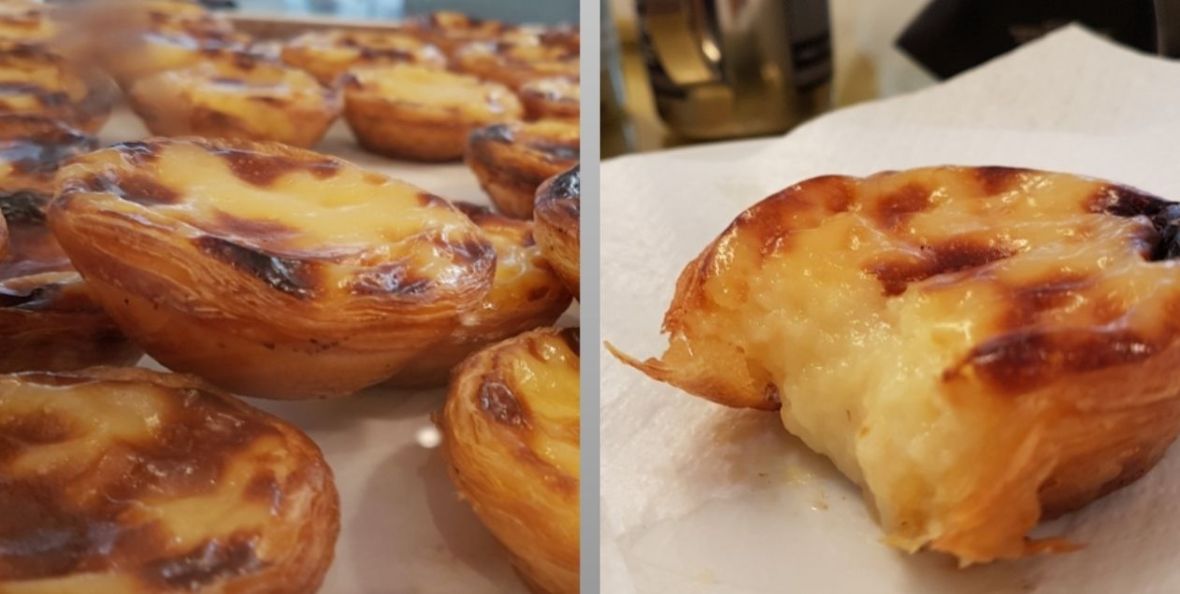
If they had lasted long enough, i’d have brought several dozen Pasteis De Nata back with me, but they’re only good for a few days. So if you didn’t get one, it’s only partially because I don’t love you, enough, but more likely because you’re just too far away, dammit.
Fado
Fado is a style of music that the Portuguese are immensely proud of. The word is associated with “fate’ or “destiny”, but is almost always sung in a melancholy manner, as if accepting one’s own fate and the sadness that may inevitably come with it. It is also associated with “Saudade” – an indescribable feeling of longing or nostalgia that is, apparently, part of the traditional Portuguese’ temperament.
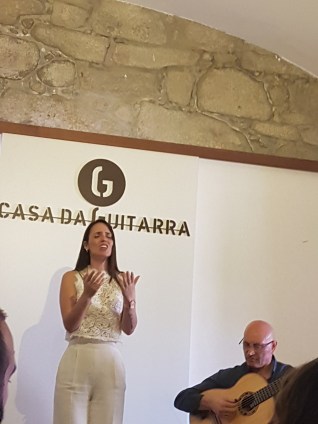
Ye elders will say, that to experience Portugal, one must hear Fado. It can be heard in touristy cafes alongside the Ribeira, or in a pokey, dark local cafe or pub. I went along for a performance of Fado songs in a cool, quiet attic location hosted daily by Casa Da Guitarra, called “Fado as 6h”. I sat there alongside dozens of others on simple black plastic chairs, as we listened to a professional ‘Fadista’ named Ana Margarida and a couple of her guitar-wielding friends belt out her woes and sorrows against the stone walls and hardwood floors. She was clearly an accomplished musician, and her gravelled, alto voice suited the tone of the genre. Amidst all the dashing to-and-fro in Porto, and in a society of Pandora’s and Spotify, it was nice to just merely sit and listen to music in it’s most simply visceral form.
Fado’s most famous purveyor is Amalia Rodrigues. Her song ‘Fado Portugues’ is the perfect example of that yearning melancholy so closely associated with the genre and is on Spotify here: https://open.spotify.com/track/6u6HC30AEOnr6QoSSRJ8FM
Port
Interestingly, the famed cellars of Taylor’s and Graham’s are not found in Porto, but across the river at Gaia (A local joke is that the best thing about Gaia is the view towards Porto). The joke is good but unfair, as clearly we come to Gaia for the booze too.
I went along to the wine cellars at Taylor’s (it was that or Graham’s, and I preferred the simpler, more anti-social audio tour at Taylor’s). As it turns out, the process of Port making is super interesting.
Port is a fortified wine made by adding grape spirit to fermenting grape juice. As it’s added prior to fermentation completing, some of the natural sweetness of grape is retained in the wine. The grapes themselves are trodden by the workers on foot – surprisingly methodically, at first slowly and in tight line (team bonding exercise idea) to trigger fermentation, and then liberally, all over the place to release all the wonderfulness.
It is then aged in vats or casks, with the permeable nature of the wood allowing a slow but very deliberate oxygenation process that matures the liquid. Generally speaking, the longer they age, the ‘smoother’ they become, with the colour evolving from “ruby red” to “tawny”. Ports contained in large vats clearly have less of its surface area against the wood and thus age slower – these ports are then sold as the younger and “fruitier” variety.
In contrast, Tawny Port is aged in the smaller, barrel-like casks so to oxygenate quicker. It can sit quite happily encased in wood for a while – one of the oldest varieties in the world – Taylor’s 1863 Single Harvest Port- still sits in cask today.


Aside from oxygenation, the wood allows some of the wine to evaporate. That portion that goes off into the ethos is lovingly called the Angels’ Share. After all, it’s hard to be damn angelic all the time without having a drink. Anyway, the more practical use of this evaporation (which clearly happens more in casks then vats) is to further concentrate the wine within the cask, thereby concentrates the aroma and texture of Tawny port.
OK, so I didn’t know that a Cooper was the guy who made the barrel thing. But you probably didn’t know that one of a Cooper’s most important jobs is his rush. Rushes which are found in marshlands are pressed into the joints of the vats and casks to prevent leakage, which works by swelling to fill the entire joint should it come into contact with wine. In the context of wine barrels, the rush is called a ‘flag’ and the process is known as flagging. Geek moment but I found that pretty cool.
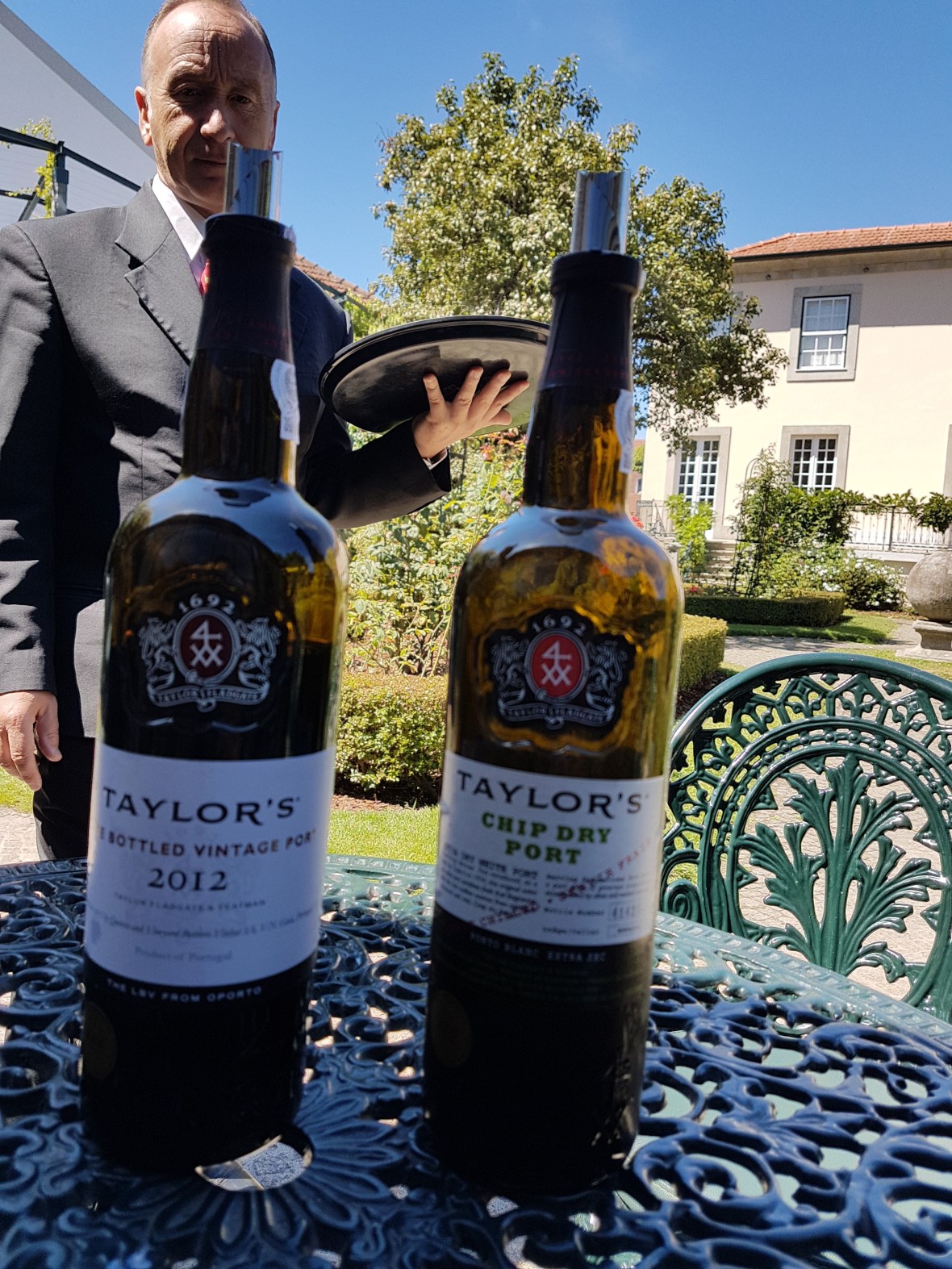
So yeah, learning all that non fiction made me thirsty. The Taylor’s tour ended in a charming garden where you were poured a glass of Chip Dry and LBV (they weren’t going to waste the expensive stuff on tourists).
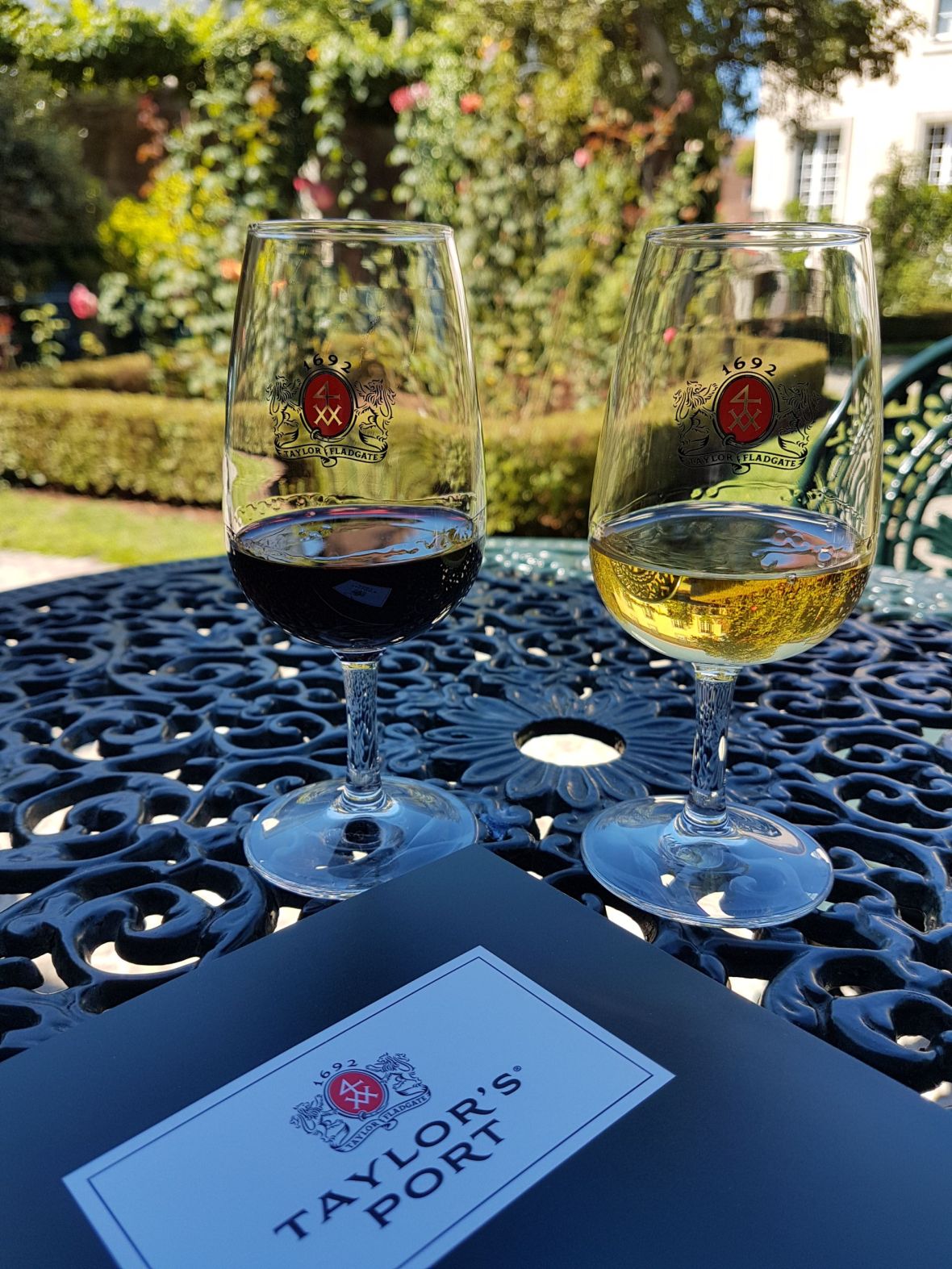
Chip Dry is White Port , made from traditional white grape varieties and fermented for longer than usual to give it a more crisp ‘dry’ finish. It is also aged in an Oak vat to give it a bit of a nutty kick. I wasn’t particularly impressed with the Chip Dry despite its whimsical name, but it’s more because I prefer the smoother, sweeter taste of red Port. Still finished the glass though.
The Late Bottled Vintage was better. I learnt this was developed by Taylor’s as a sneaky quicker-time-to-market alternative to Vintage Port. The Vintage variety, unlike most ports, only sit in the cask for 22 months and then spends the rest of the aging process in the bottle. As such, a natural sediment or “crust” forms at the bottom and requires decanting (and fast drinking) on the day of serving. LBV on the other hand, ages for a longer 4-6 months in a vat – making it ready to drink faster – and is then “late bottled”. All the sediment is left in the wood, so the port is ready to drink from the bottle – and it lasts for at least six weeks even when opened. LBV is basically the ‘ready meal’ of ports – cheaper, more convenient, and doesn’t really require that much class to enjoy. And yeah it was gooood.
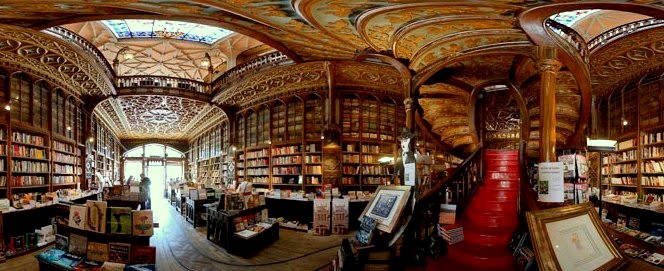
One last thing worth mentioning is that Porto is the home of the Lello bookstore. Which sounds like a ‘so what’, but might get you a wee bit more excited when I mention that J.K. Rowling spent a number of years teaching in Porto and it is widely believed that her inspiration for Hogwarts was the place the interwebs calls the ‘most beautiful bookstore in the world’. So beautiful and insanely popular in fact, ever since Harry Potter took off, that you now have to purchase a ticket and then queue for a while for a chance to then go in and gawp, whilst attempting to nimbly take forbidden pictures of winding staircases and ornate decor whilst failing miserably to avoid photo-bombs by a dozen similar struggling eye-sore tourists. I didn’t bother in the end, so please enjoy this Google-nabbed stock photo. You will never take this photo yourself, ever.
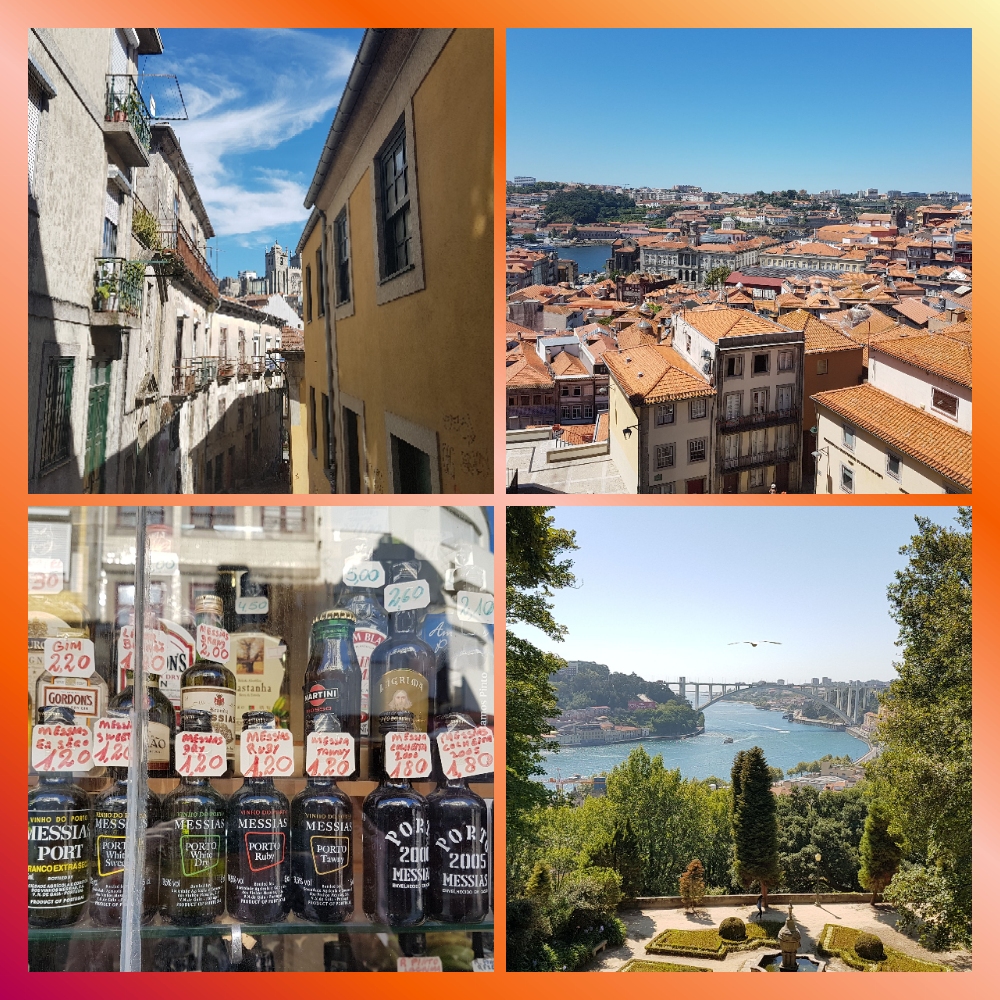
With that, I leave you and this post with a few fragments of my fond memories of Porto. Of quaint rustic streets, swatches of clear blue skies and seas, and many many tiny bottles of Port. Next stop, vibrant Lisbon and the magical Sintra.
 KJK
KJK 