Day 3
The next morning at stupid o’clock, Teguh picked us up for the drive to catch the sunrise at Borobudor temple. Sweetly, he stopped off at a 7-11 and bought us both cups of hot coffee to nudge us back into the world of the living. When we arrived at the meeting point of the Manohara Hotel, we joined a group of drowsy looking tourists with our miniature flashlights, and eventually headed up to the entranceway to the Borobodor complex, literally right next to the hotel. Looking back, it probably did downgrade my experience just a little – historic sites with epic views are meant to be notoriously difficult to get to, and be in the middle of nowhere (Aini told me this indeed was the case when she came here as a kid)…as opposed to next door to a big hotel that holds a monopoly on the location between the hours of 5-8am. Oh well, that’s progress for you.
Commercialisation aside, Borobodur is a mightily impressive and robust-looking Buddhist temple, with several tiered platforms laced with stupas and intricate buddhist wall carvings. The platforms are divided into three main levels, which indicate the Buddhist worlds of desires (where common folk like me are destined to stay), the world of forms, and that of formlessness – the final state of Nirvana.
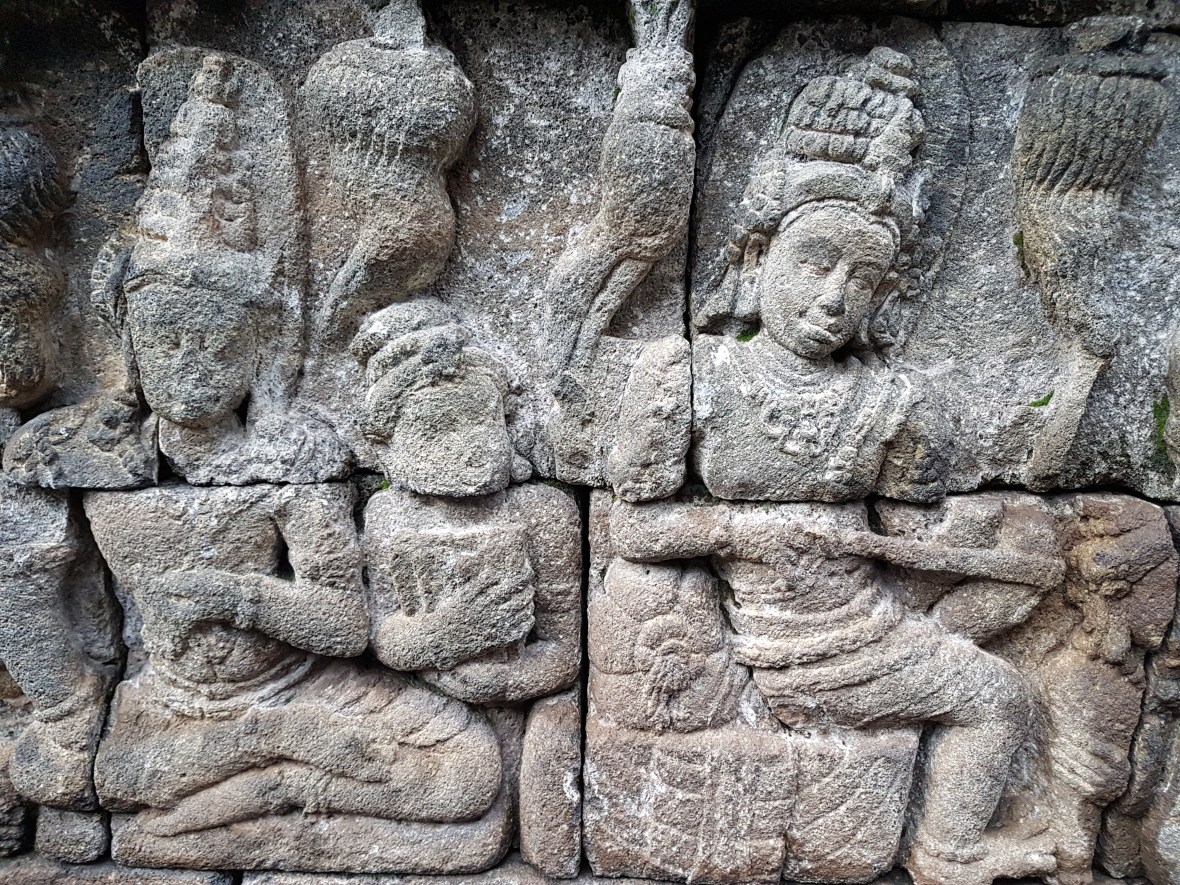
The sunrise tour is especially famous, as the morning mist swirls around to hug the stupas, against the backdrop of the rising sun. It is all meant to make for a wonderfully atmospheric and spiritual atmosphere. In anticipation of our impending Religious Experience, Teguh told us to try take a moment to close our eyes in meditation, as it was an incredibly holy spot at the most beautiful time of day.
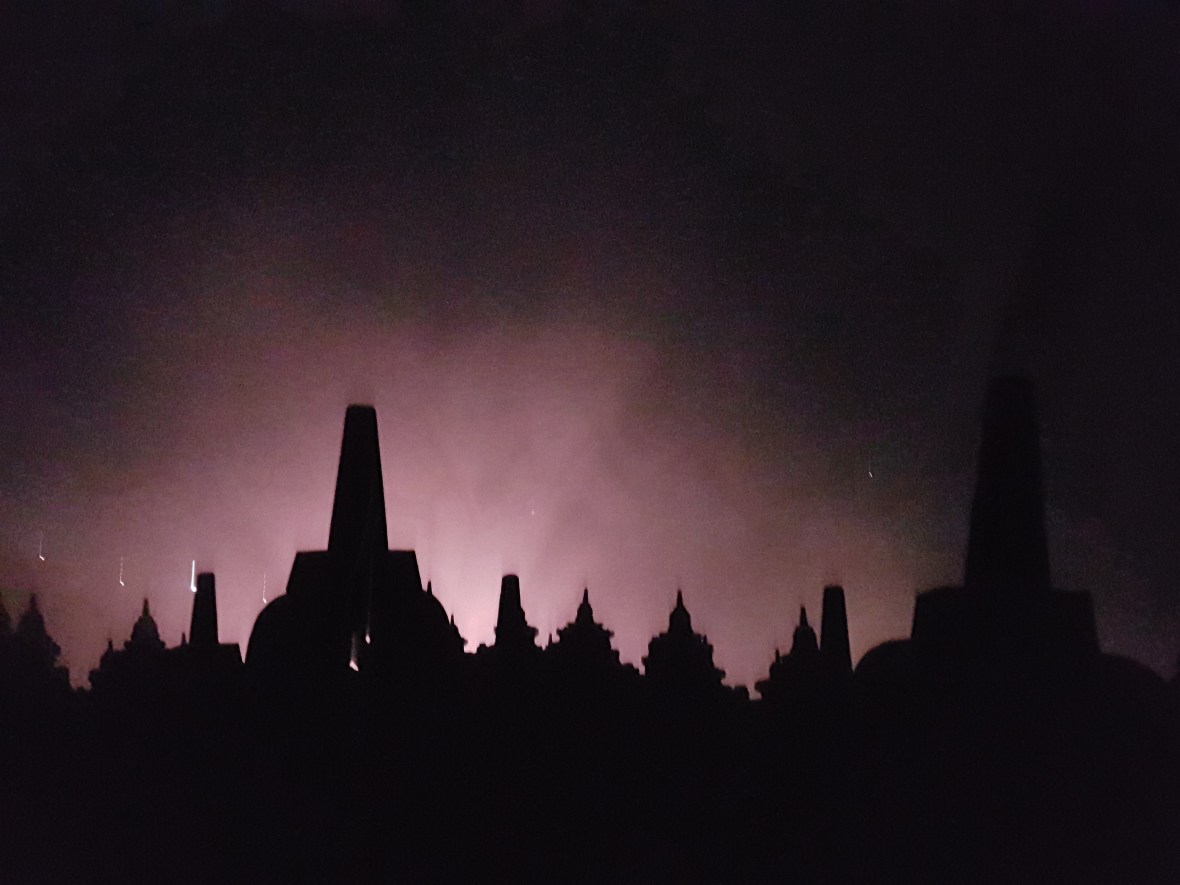
So we chambered up to the top level and eagerly awaited nature’s marvels. And then it began to rain. We had not brought an umbrella, and there are no sheltered areas on Borobudur. And it continued to rain. And it got heavier. It’s an interestingly liberating feeling, as the rain gently soaks you to the bone and you just stand there on one of the world’s most sacred sites, quietly and helplessly. Despite my innate pessimism, I embraced the occasion – there’s no better way to bask in meditation then to wash away all superficialities, and stand there drenched, listening to the patter of raindrops against stupas.
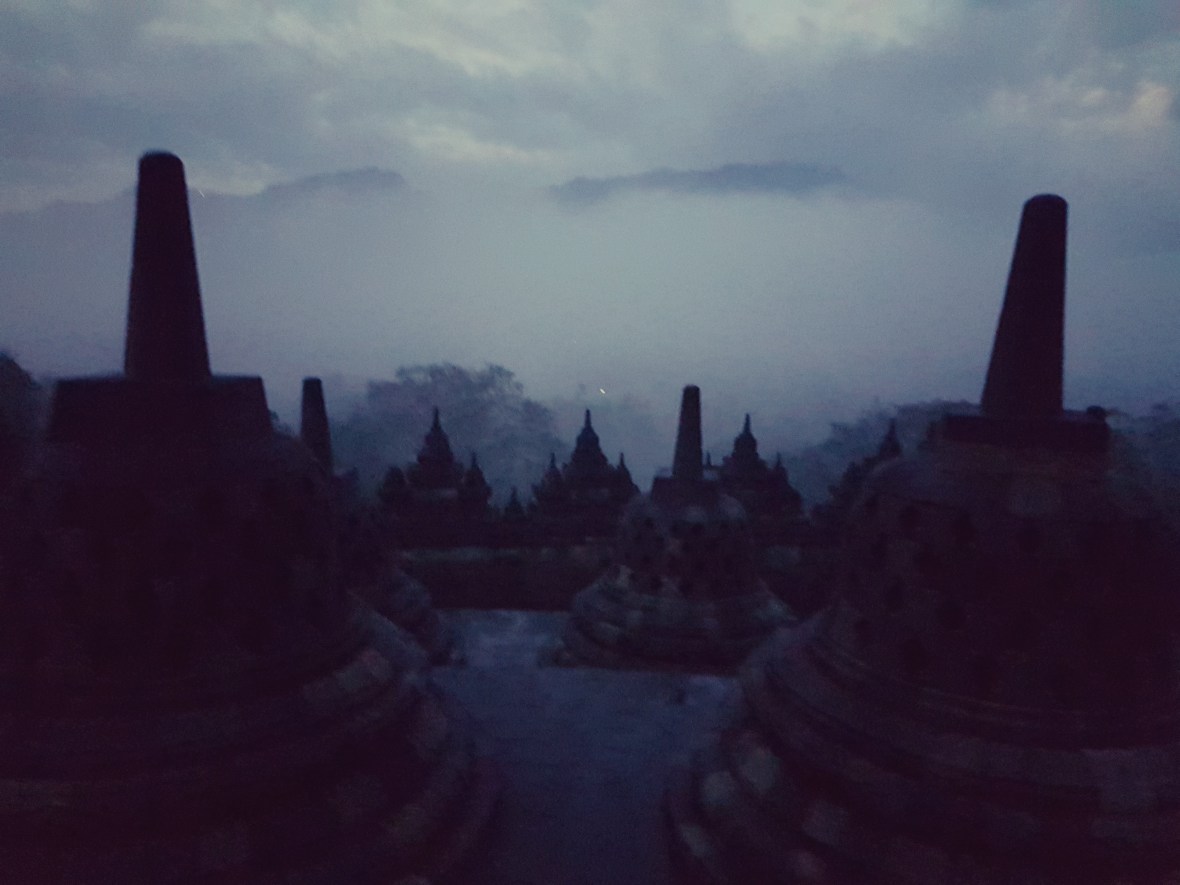
After a while, the rain did subside, and the sun did rise. It was very pleasant and a worthwhile experience (we didn’t exactly have to trek hours up a mountain to see this), though given the dreary weather we were experiencing, it wasn’t the spectacular burst-into-song-hoist-baby-lion-cub-into-air kind of sunrise that some bloggers had raved about.
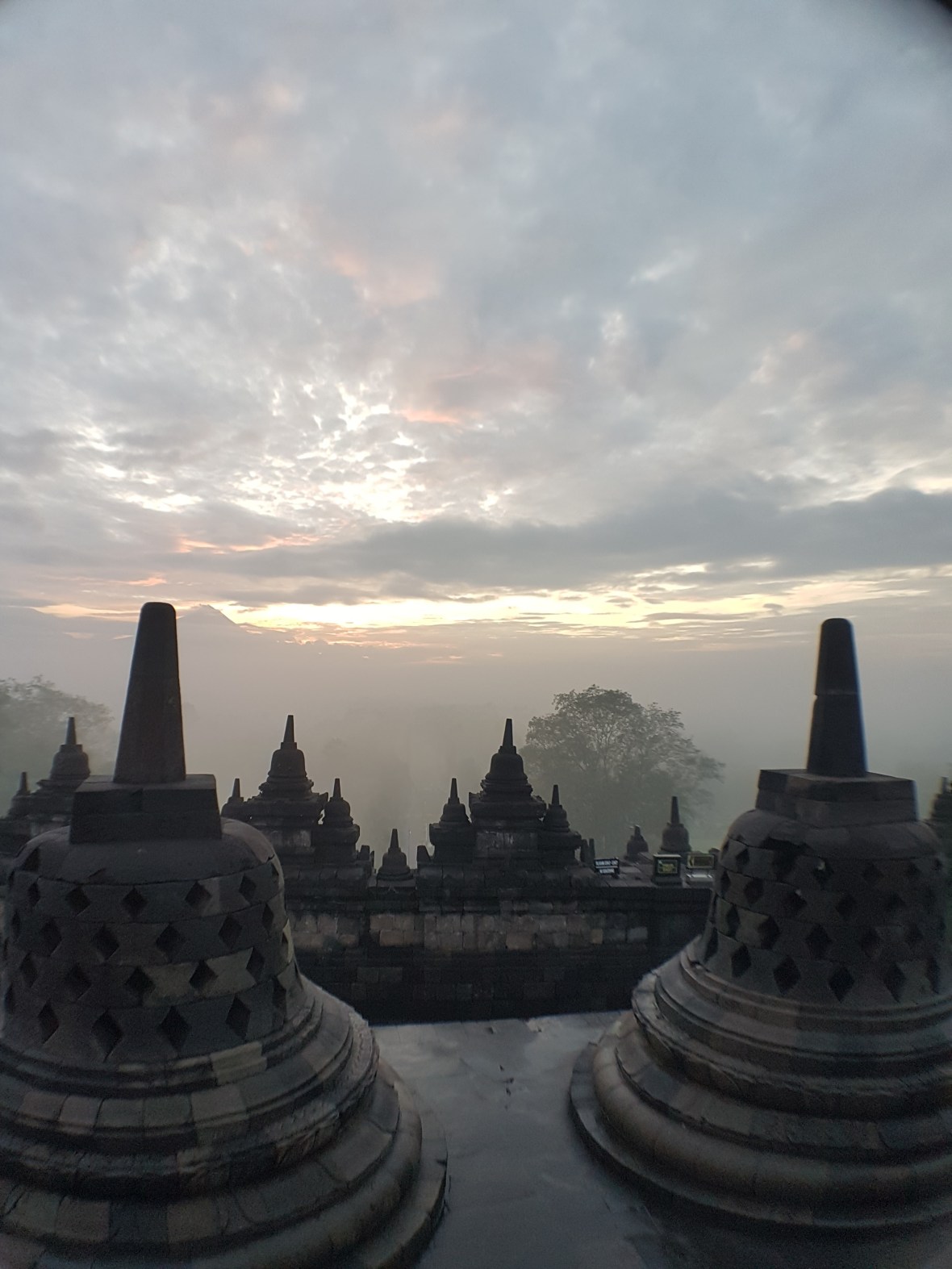
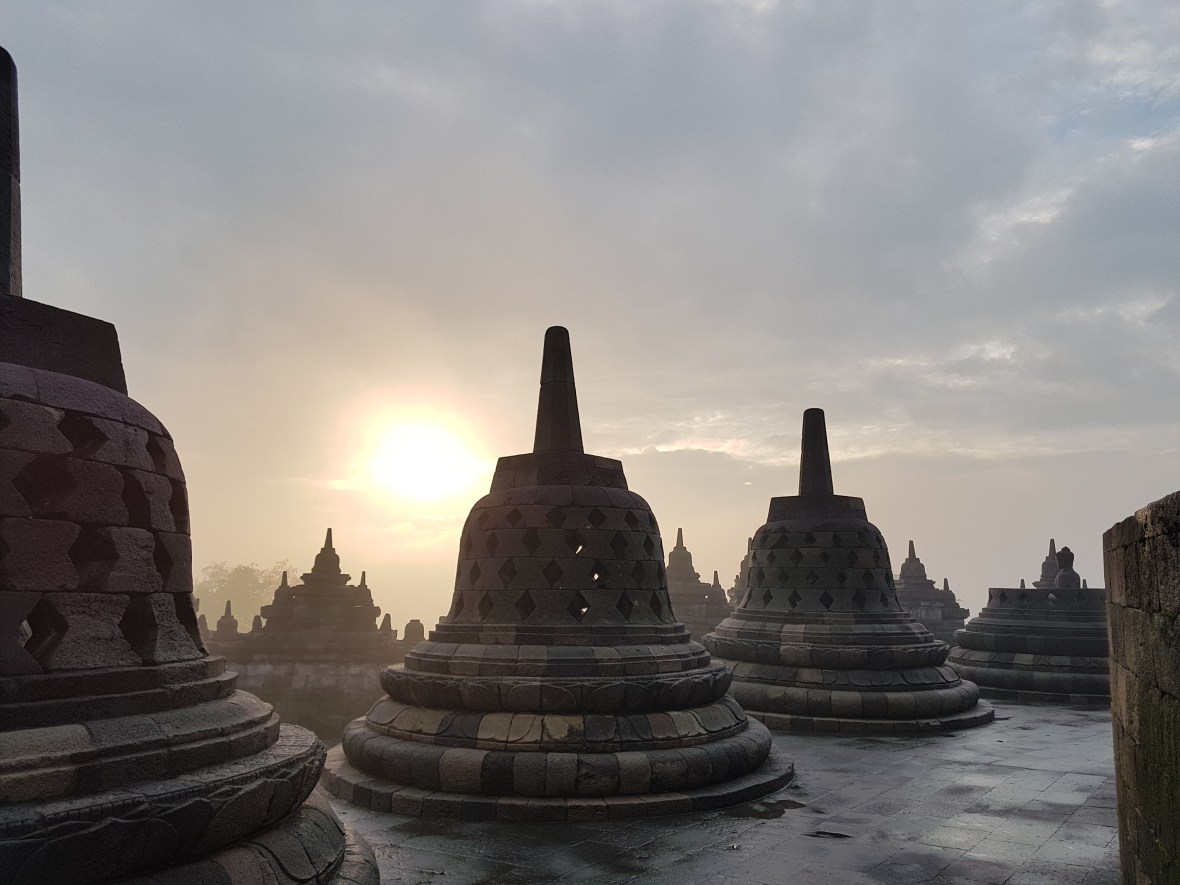
K, so it’s quite nice
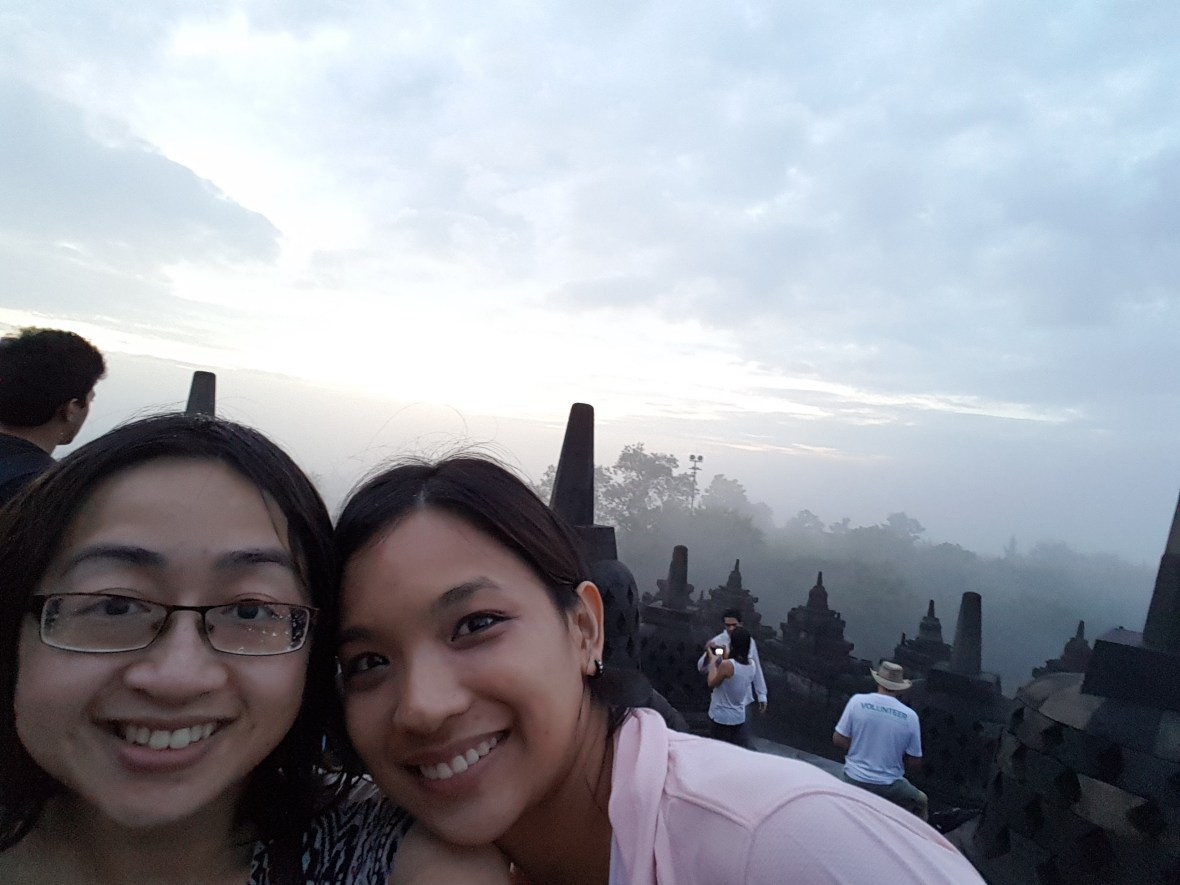
Once we were done at Nirvana, we ambled and wound our way down through the various levels, not in a particular hurry to return to the world of desires.
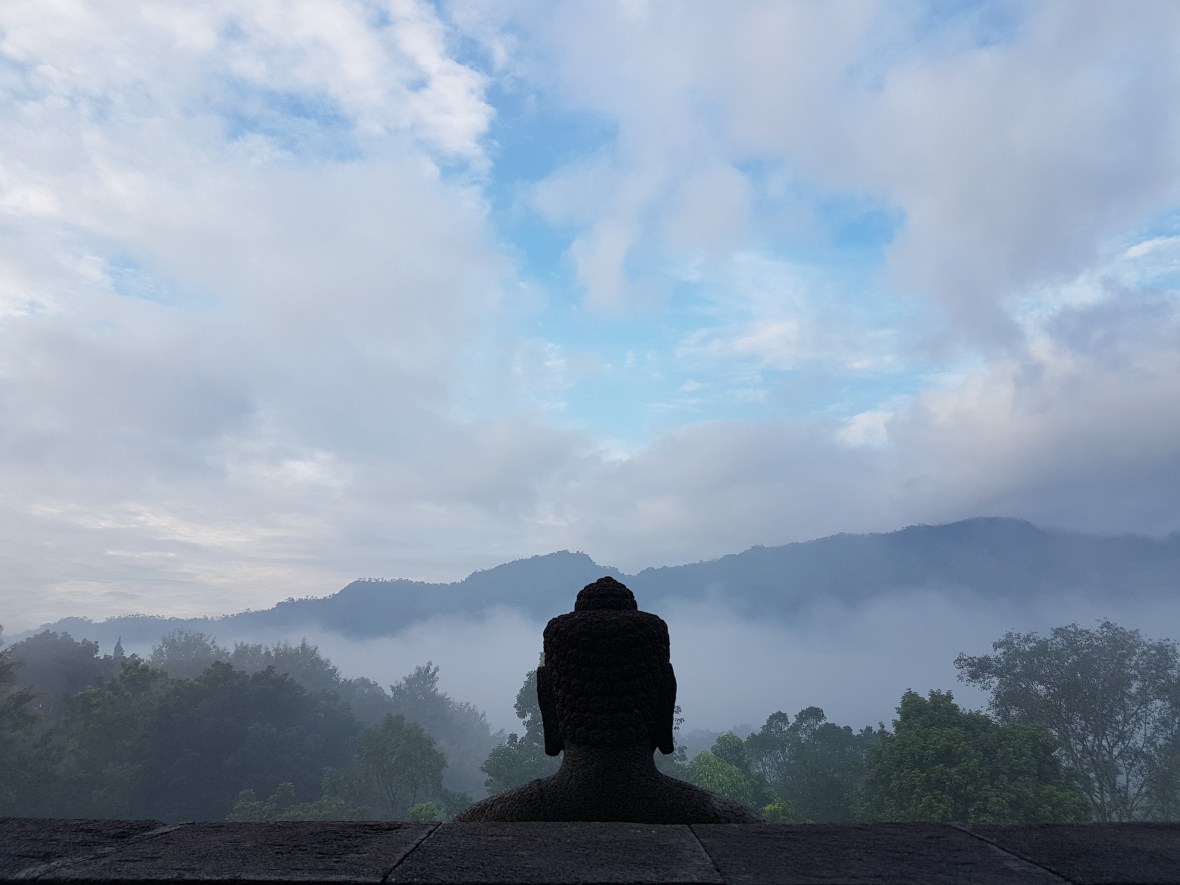
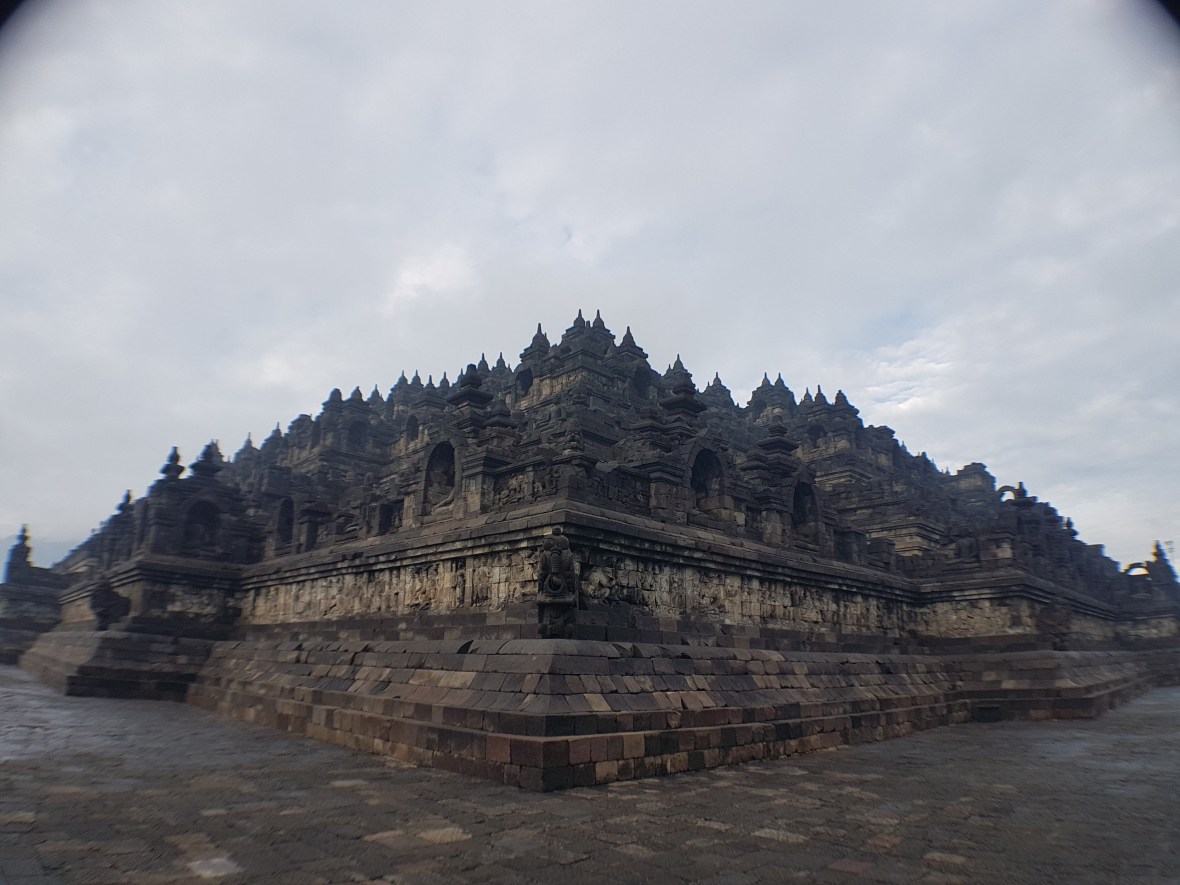
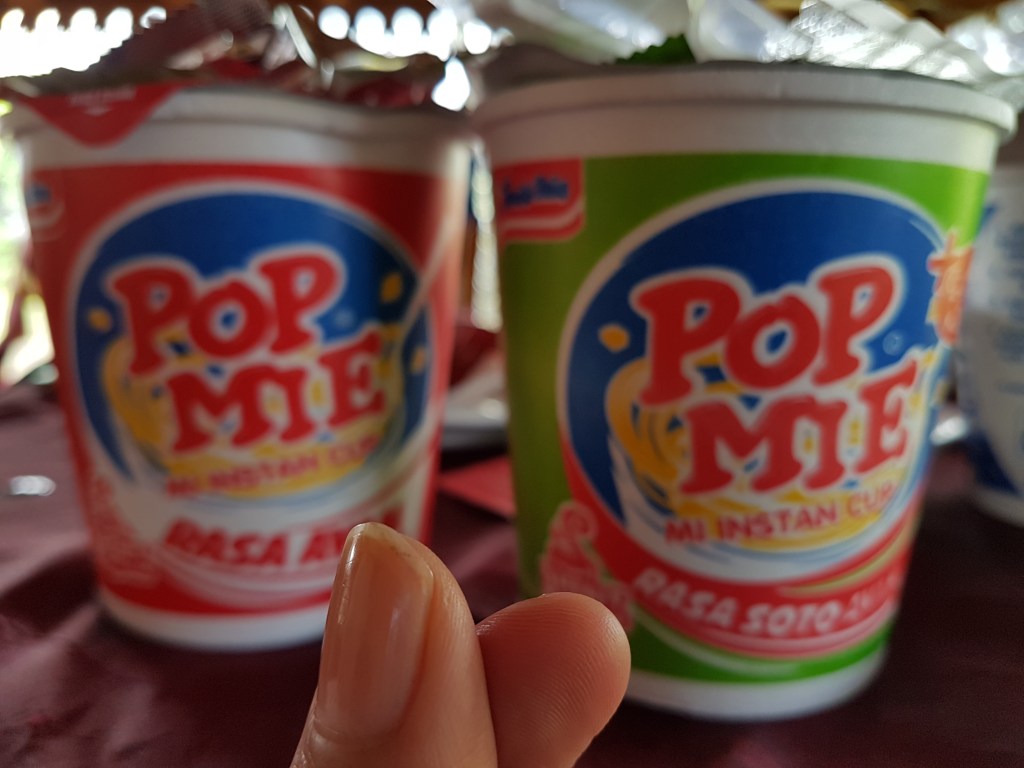
Teguh – bless his cotton socks – had been worried sick and had sent us a message along the lines of “are you girls OK?? saw it was raining and tried to find you to bring you umbrellas..” We had assured him that yes, we were big girls and had survived the flood – and we made our way down to the outdoor breakfast area of the hotel where we were provided a cup of coffee and a small Indonesian snack. Teguh, whilst waiting for us, hadbeen enjoying his own breakfast in the car, sending us a photo of his pot of Indo Mee (Indonesian variant of Pot Noodle).
Katie: *types back ‘yum’*
Teguh: *types* ‘you want?’
Katie: *Looks at Aini*
Aini: *Looks tempted*
Katie: *types* ‘yes pleeeease :-D’
The guy then races over to our table and hands us the remainder of his Indo Mee, apologising and promising to return shortly with two new pots. We sit there a little stunned – but grateful. We ended up finishing up 2.5 pots of Indo Mee between us thanks to our lovely driver. We eventually headed back to the hotel, very much satisfied after our morning’s spiritual experience. Oh, and the sunrise at Borobudor wasn’t bad either.
The rest of the day was spent at leisurely pace. One section in the ‘How to Be Lokal in Jogya’ Guide that they give all tourists at orientation, describes how one must definitely try the local food, in a local setting. At the recommendation of Teguh, lunch was at Duta Minang. It was a small, modest eatery near our hotel, the equivalent of a Cha Chaan Teng in Hong Kong or a Zi Char cafe in Singapore. The tables were basic and plastic, the cutlery was heaped in a box, and all the locals were watching a wall affixed TV showing overly dramatic Indonesian soap operas. The way it more or less worked, was that there was a stack of cooked food (Fried Chicken, curry, Beef Rendang, Sambal Prawns etc) that they piled high by the window, and you’d come along and shovel portions of what you wanted onto your plate and pay for what you eat.
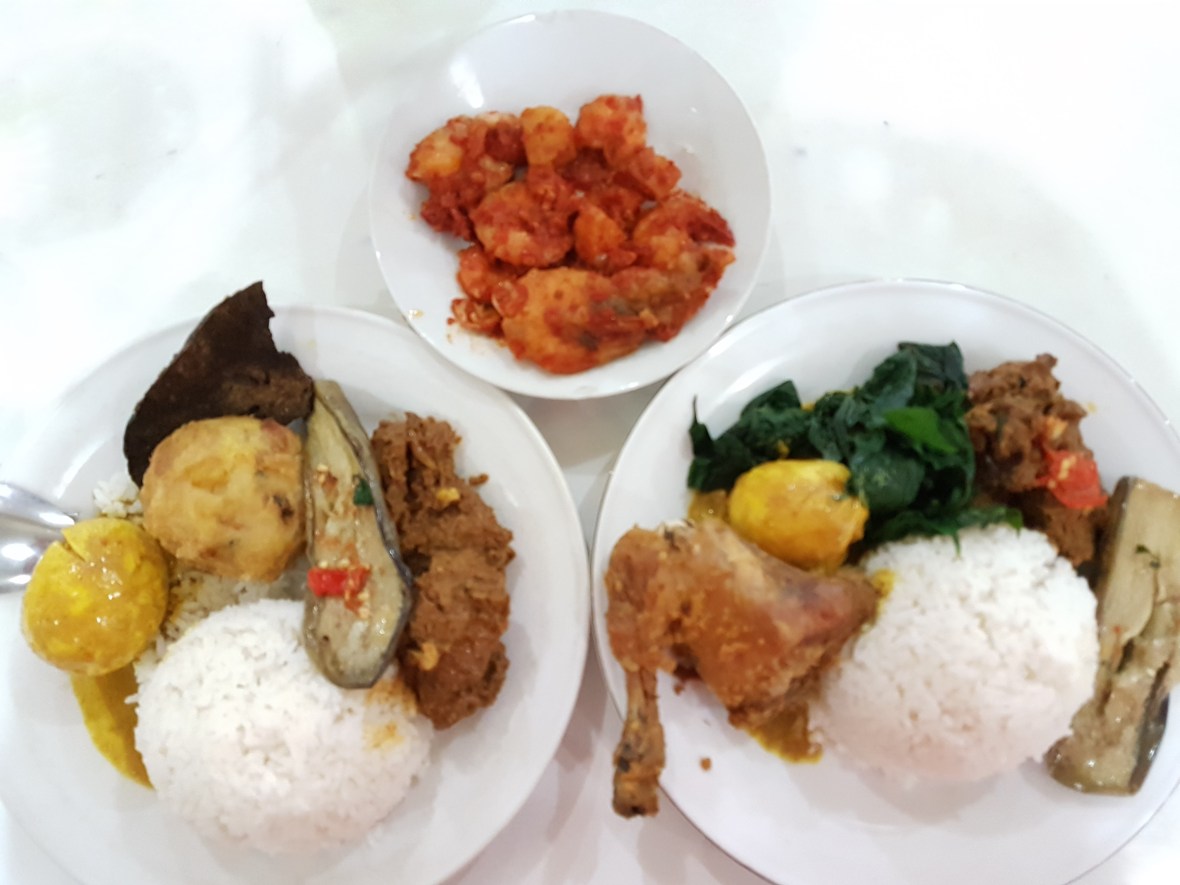
The spread
It was highly enjoyable, even if I had no idea what the cashier was saying (thank God for Aini and her pidgin Bahasa) and it was a hearty and filling meal, even if the Rendang was incredibly salty even for me. Having taken the bus AND eaten at the local resto, I think they should practically gift me my Indonesian citizenship.
Lunch was walked off down and around Malioboro (verdict: eh sure), coupled with an accidental stumbling-upon of a Javanese massage parlour we had half heartedly googled earlier on in the day. The place was small but cosy and clean enough, and man, Javanese massages are GOOD. Not hard elbows like Thai massages, and no poncey aromatherapy oils with light stroking of skin like Swedish massages. Firm, but comfortable, and of course, great value for money and highly recommended.
That evening, we didn’t do anything special, just dined in a castle – no, seriously – which Aini had been gracious enough to (seemingly, based on the utter lack of other diners) rent out privately, for our dining pleasure. Hey, it was my birthday ya know, I deserved nothing less.
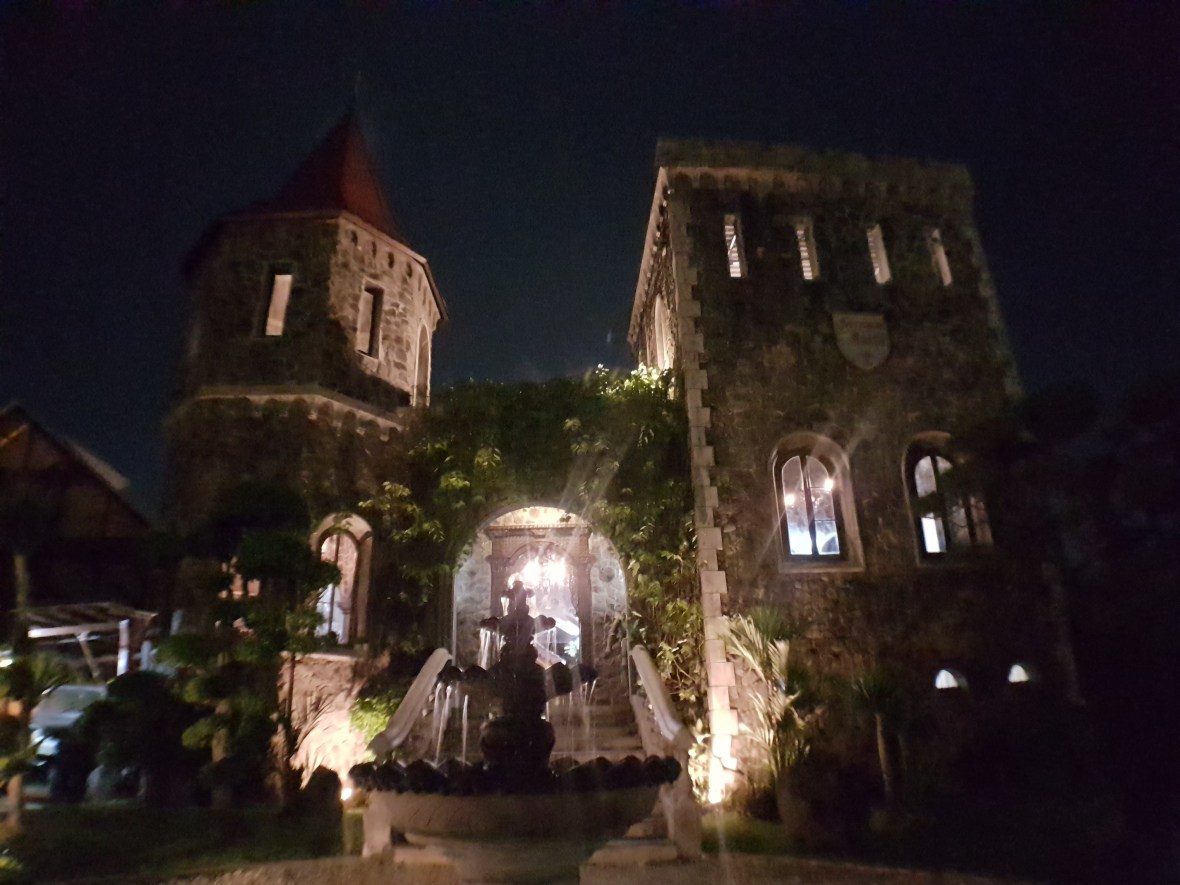
Bitchin’.
Day 4
We had a flight to catch back home in the late morning, so what better way to finish off the trip than to spend the final morning at Prambanan. The temples were off in the same direction as the airport, so we arranged for a taxi to sit patiently with our bags for a couple hours while we explored. I love how we can do that.
It was 6am, and it was a beautiful morning.

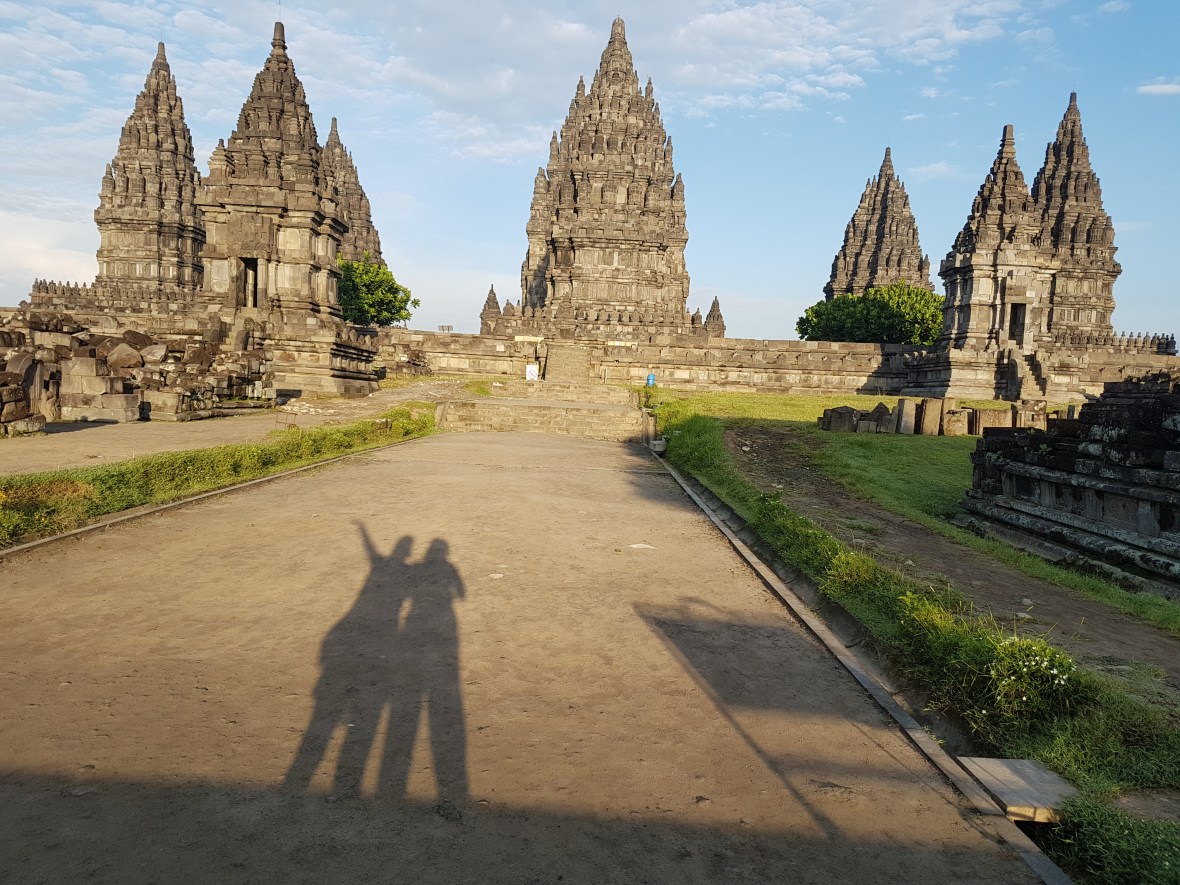
Given we were more or less the first visitors that day (at least the first ones who passed through the ‘foreigners’ ticket office), it was exceptionally peaceful and quiet, bar for a few workers who were sweeping up around the temples, and the faint crackling sounds of the speaker system, gently playing music in the air.
As we started to approach the main complex, housing the iconic Trimurti temples, Aini paused and smiled.
“That’s my grandad’s song.”
And she didn’t mean it was her grandad’s “song”, like your uncle’s “song” is Careless Whisper which he always drunkenly sings at family weddings. Her grandad was a composer whose works were, back in the day, associated with the ‘golden era’ of Malay films. Whilst he penned hundreds of songs, he was a humble chap and only put his name to a few dozen of them. One of the ones which he doesn’t often get credited for (but you can find a credit when you look hard enough on Google), is the one we heard playing through the air at Prambanan – ‘Dayung Sampan’. (The melody is so famous, that even Teresa Teng sang a chinese version of it called ‘甜 蜜蜜’ or ‘Sweetly’). That song hung in the air that morning, and I still associate it with memories of Prambanan.
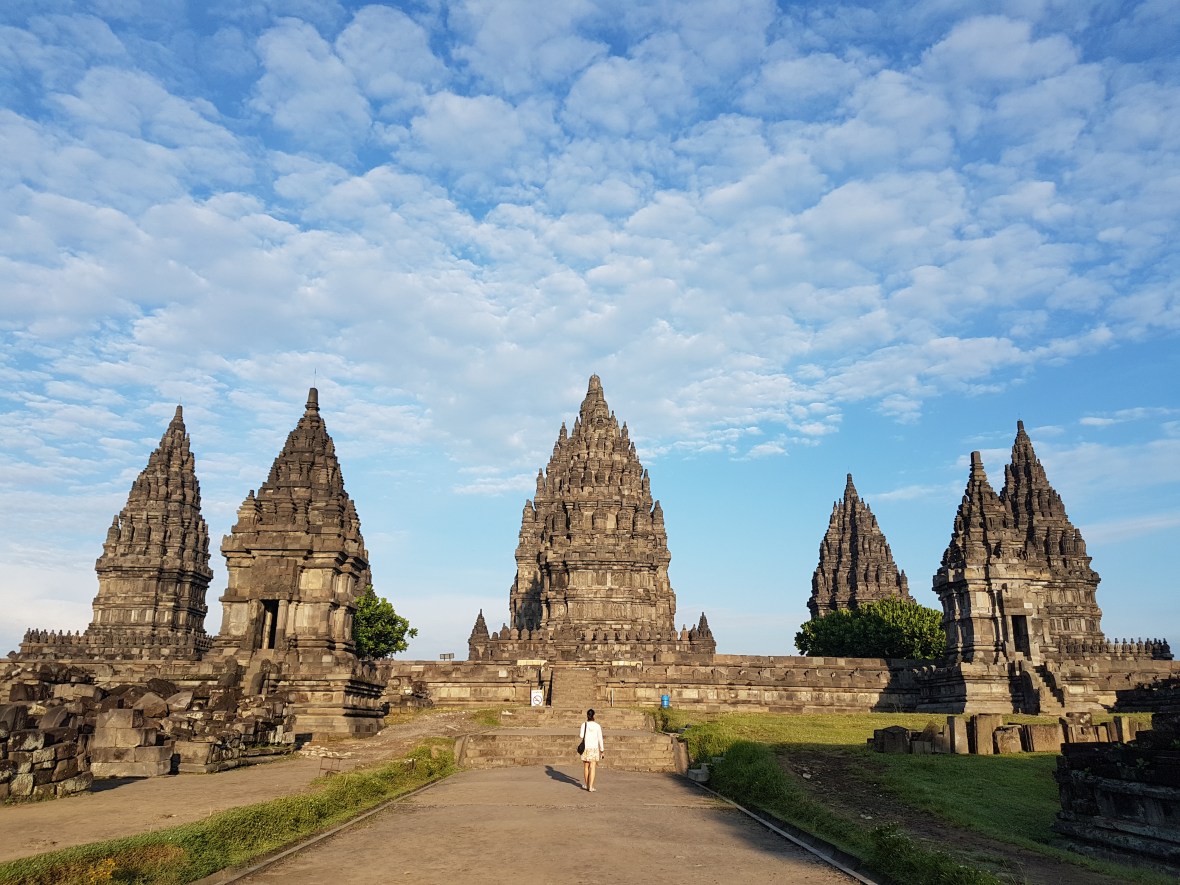
With memories of the grandad
We then went up and down each of the temples and paid our respects to Shiva, Vishnu and Brahma.
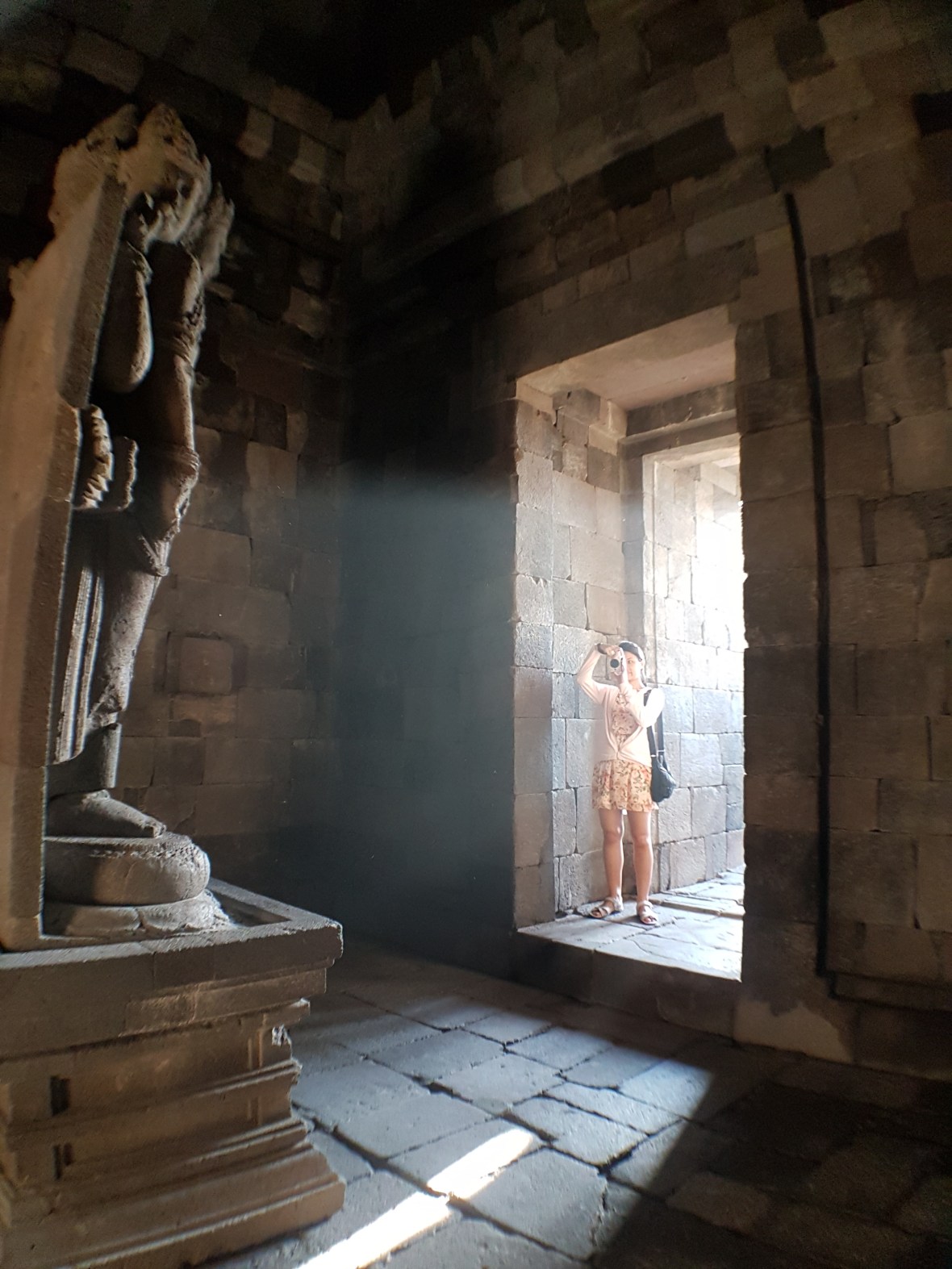
Saying hello to Shiva. Or Vishnu. Or maybe Brahma
It makes a world of difference when a site is not swarming with tourists in plastic ponchos and garish looking t-shirts.
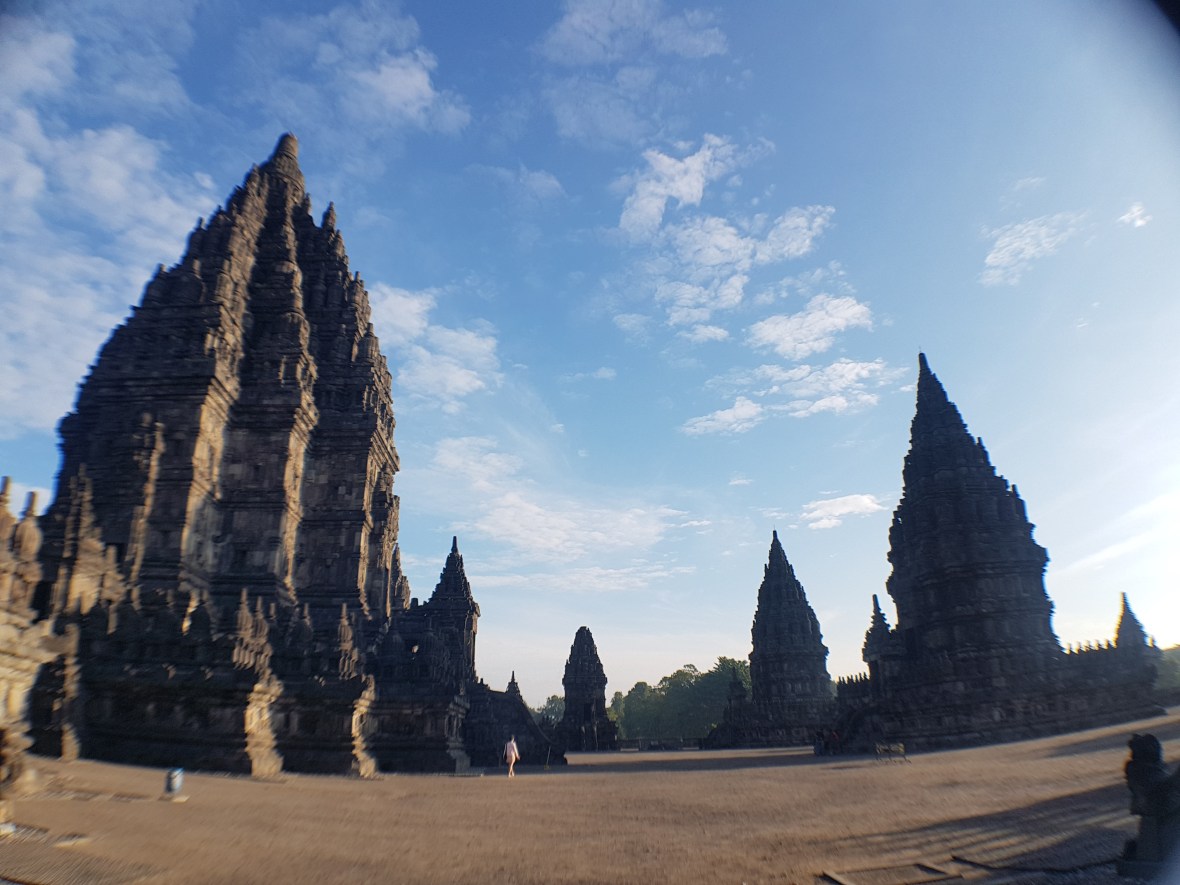
Not a soul in sight
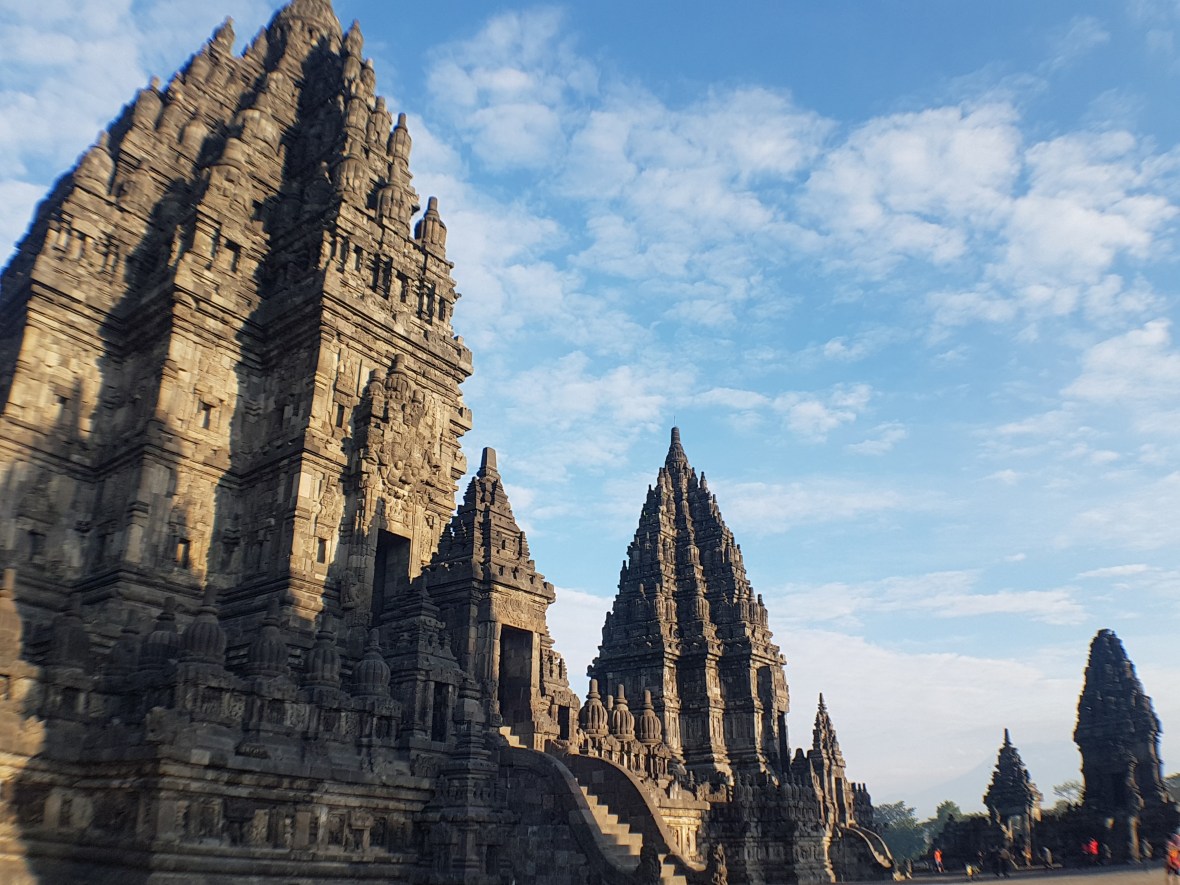
Beautiful intricacy against a cirrus sky
Back in the day, Prambanan consisted of around 240 temples, but a major 16th century earthquake devastated it, leaving the majority of the site as rubble. In addition, the hulking sight of Borobodur awakening at sunrise tends to get people a little more excited then Prambanan, so it has a slightly lower profile than it should. We personally felt it to be more beautiful and impressive than Borobodur however.
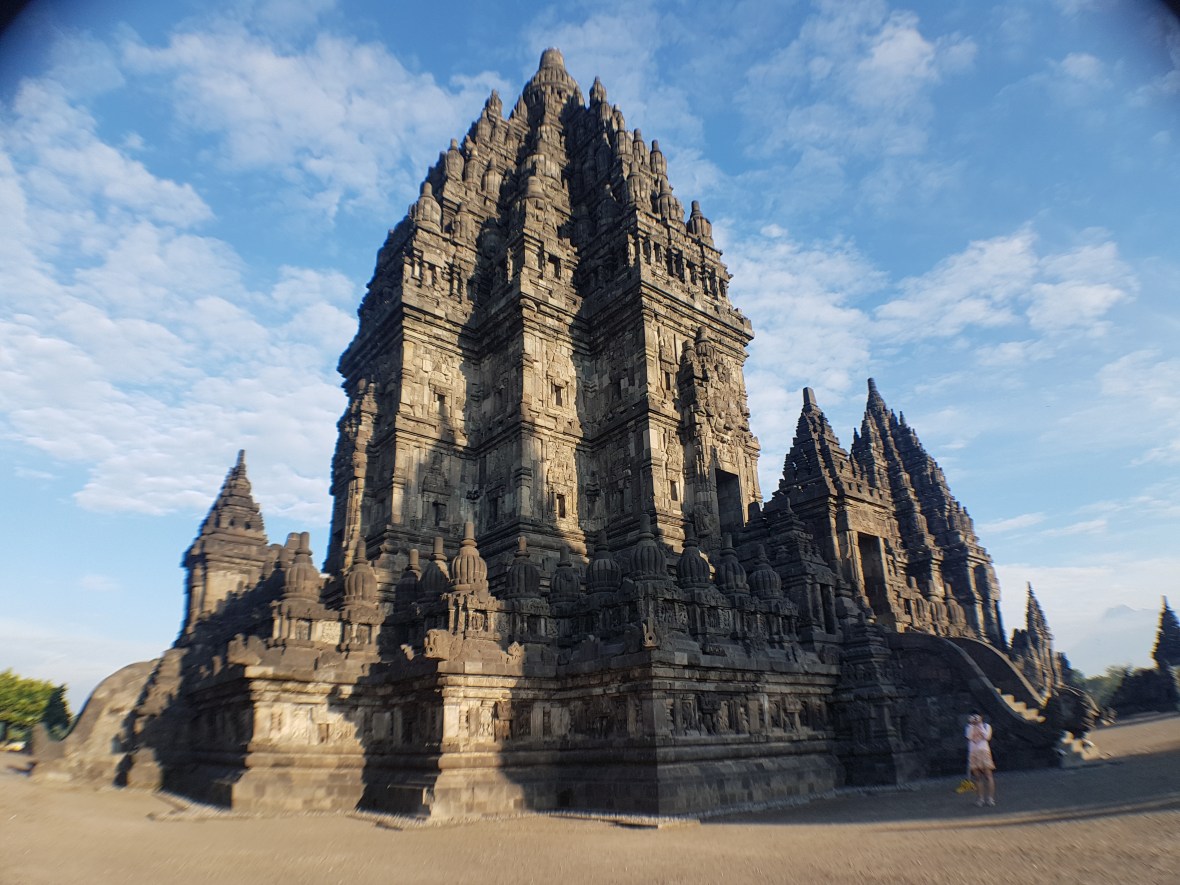
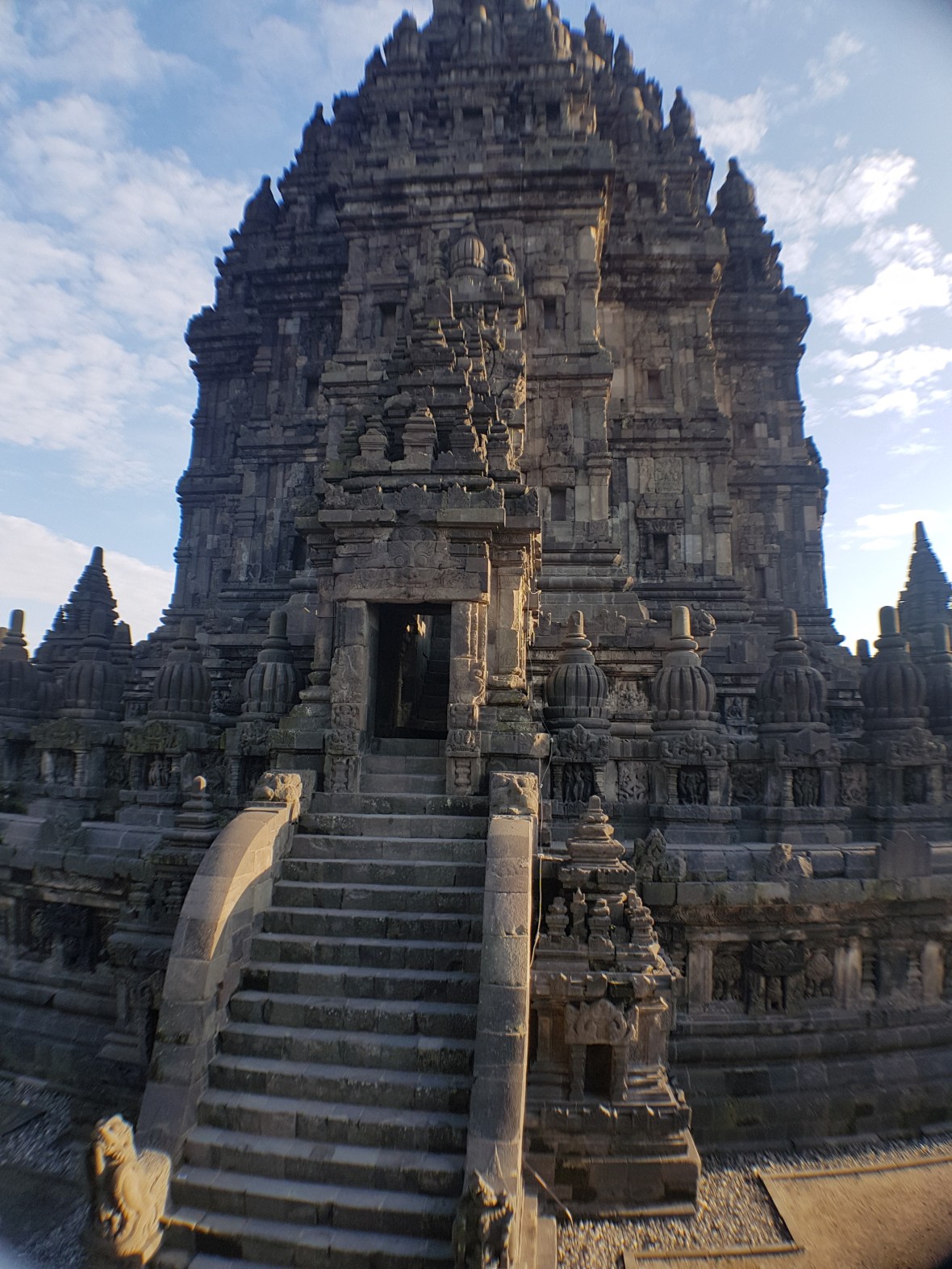
The bright skies and lack of hoomans definitely helped – but like Angkor Wat, I have a huge appreciation for societies who tirelessly build beautiful, vast landscapes as far as the eye can see, all in the name of their faith. Whilst Borobudor was impressive, it felt more blocky, isolated and uniform, whereas the tall, majestic spires indicative of the Hinduist Prambanan style, across the multitude of half-destroyed temples, evoked much more feeling in me.
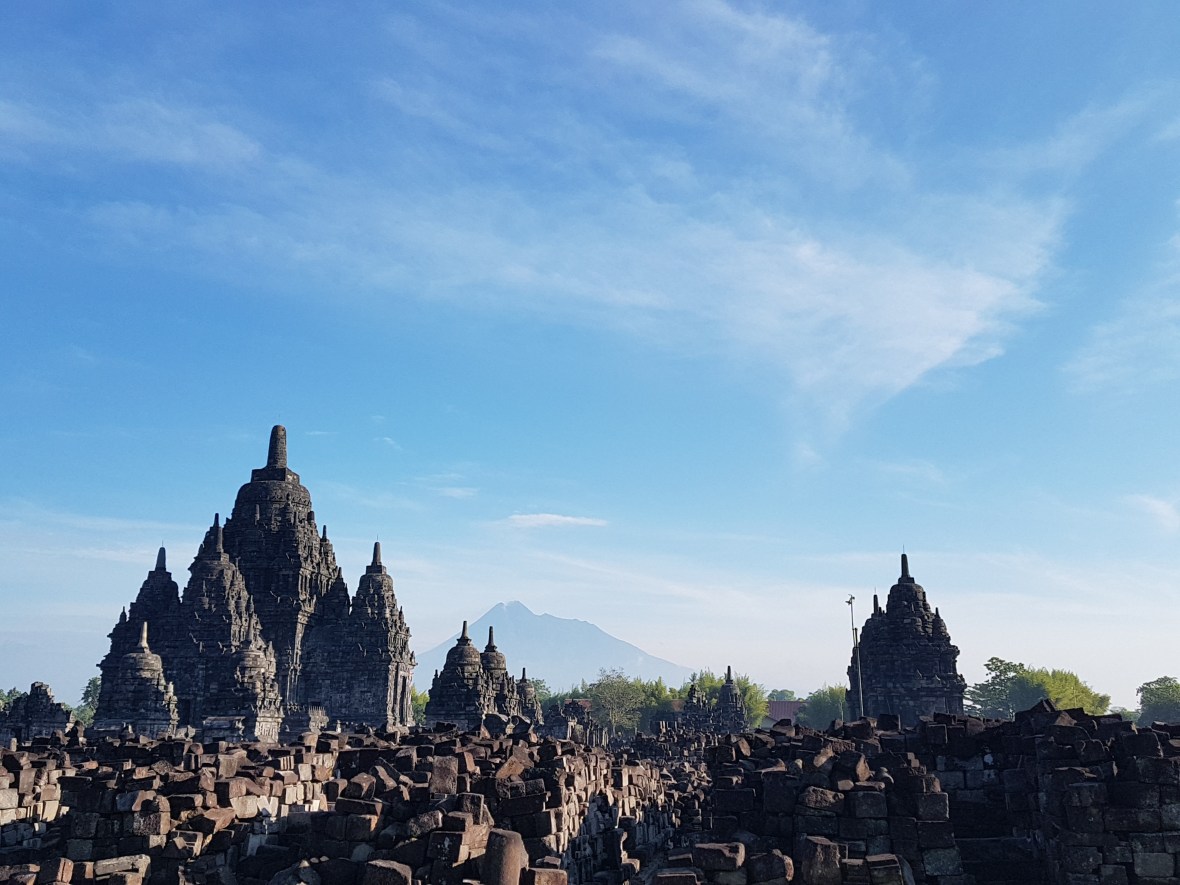
Ruins of Candi Sewu facing Mount Merapi
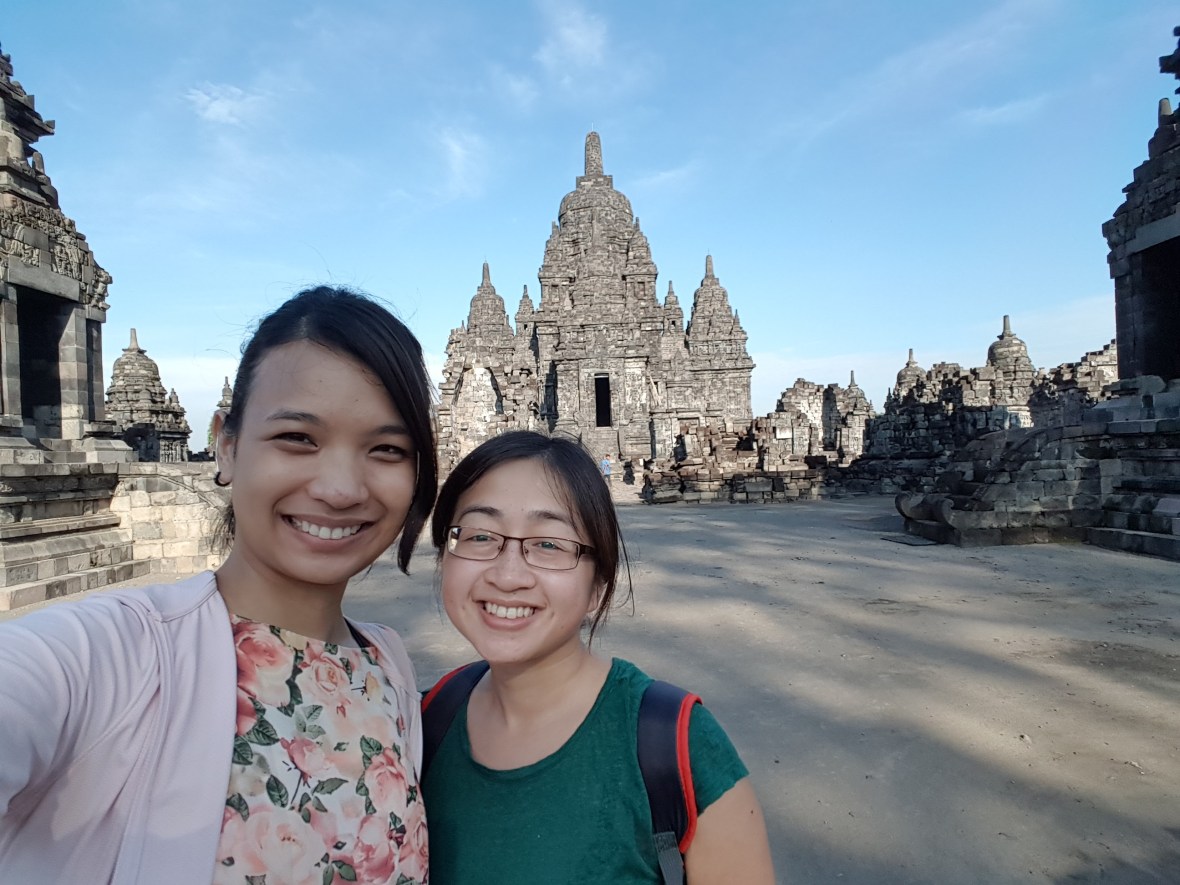
A private audience for Candi Sewu
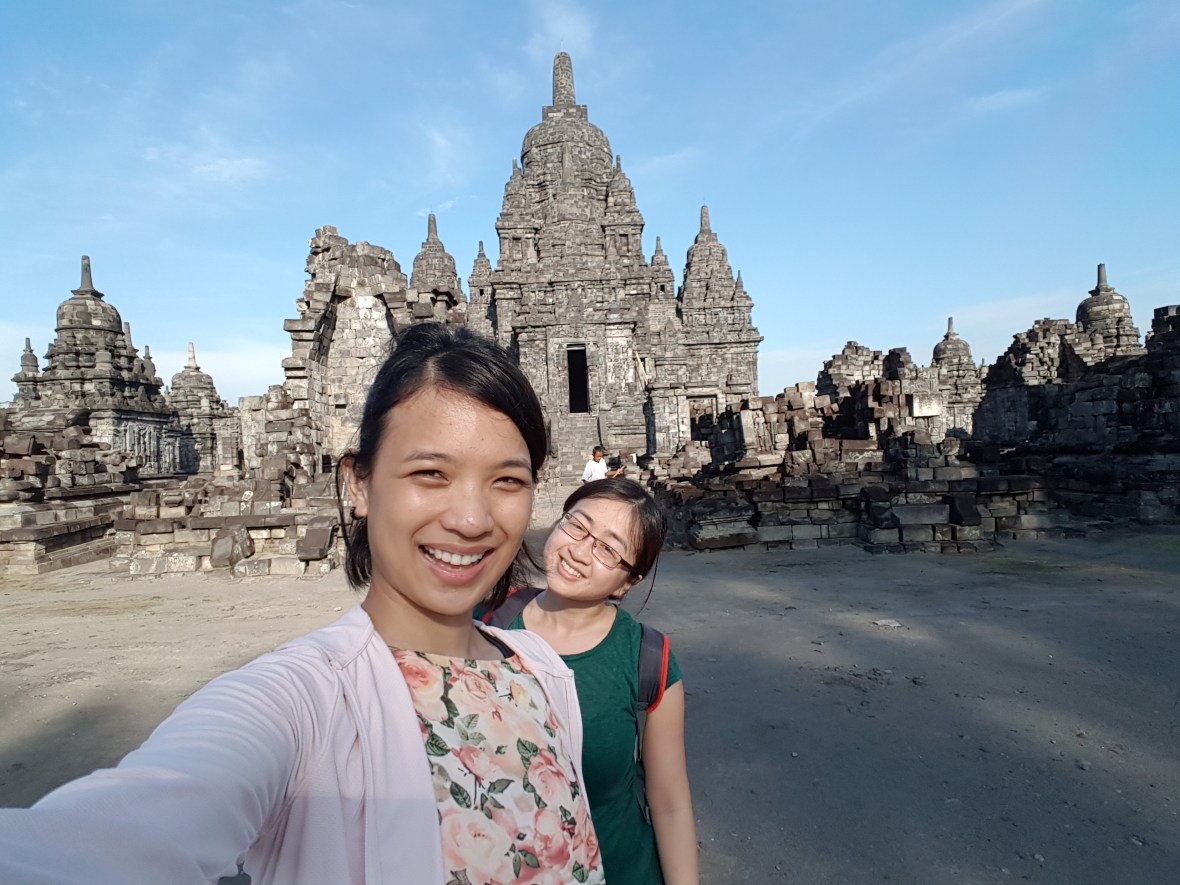
Apart from the bloke popping out of my head
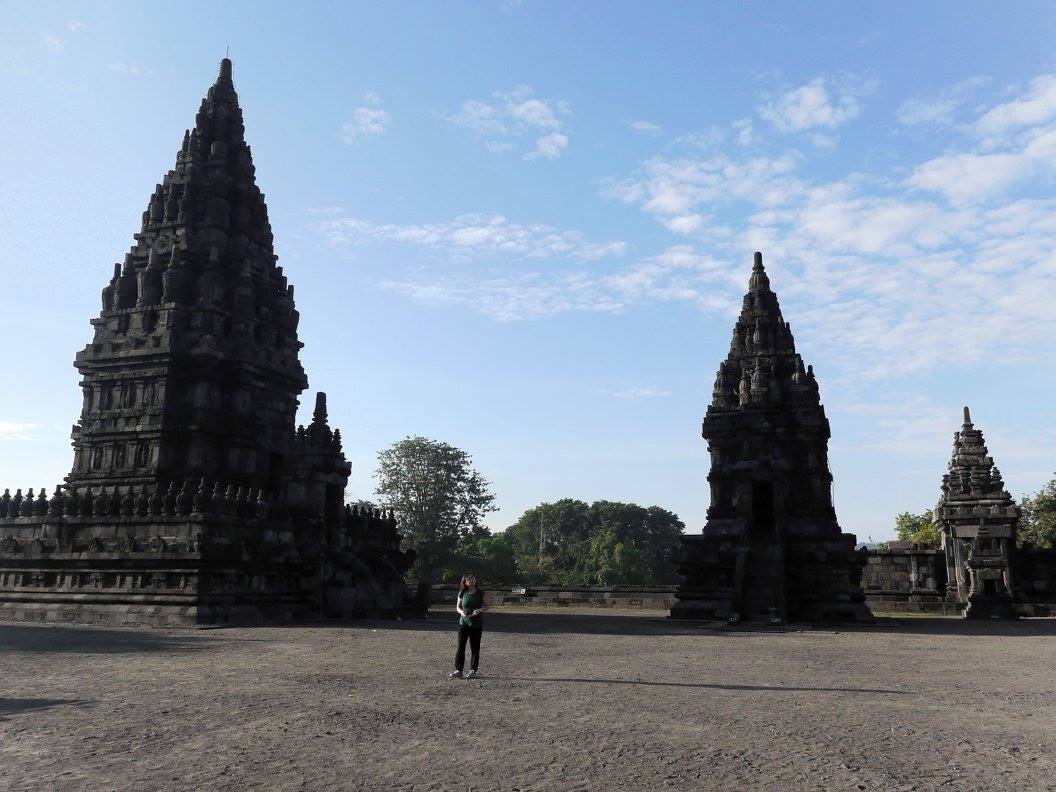
I’d say “gosh they’re so tall” but i’m kinda used to feeling that already
And with that, it was the perfect way to leave Jogjakarta. We hopped back in our taxi, took the short ride to the airport, and with our last few ringgit, bought ourselves a couple of coffee buns whilst we waited for our flight to return home to Singapore (which by the way, a whole year on, still sounds entirely surreal to me).
I left with fond memories of temples, castles, massages, noodles and Teresa Teng in my heart and my head. Jogya is a wonderful place to visit, with much to offer and little pretentiousness about it as it is above all, a spiritual place. It was a pretty awesome birthday week, and it wasn’t over yet.
One final credit, to one of the best holiday buddies I could ever possibly travel with, despite all the flakiness.
Lay’s potato chips.
🙂

What ‘demented’ looks like
 KJK
KJK 